
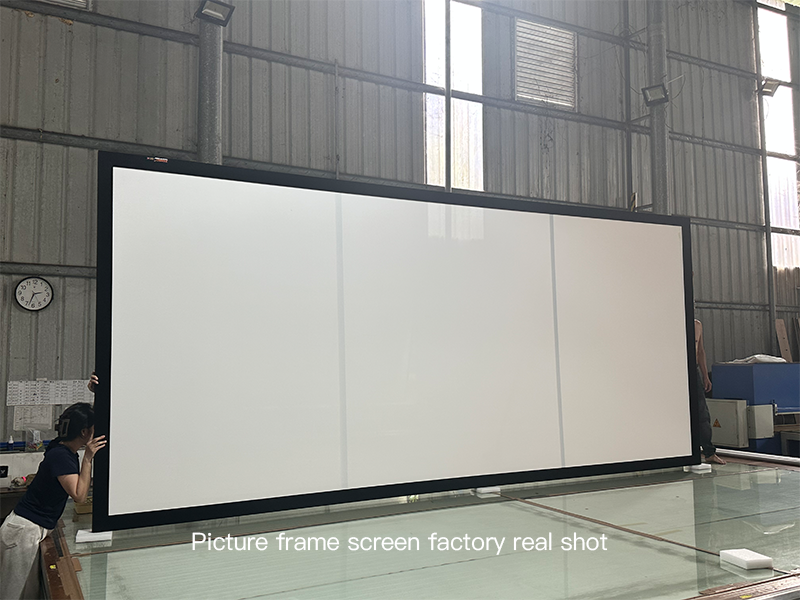
Who wants to invest heavily in projection equipment only to be let down by a Projector Screen? During an Asia-Pacific regional meeting room project for a multinational company, the originally selected matte white Projector Screen turned core data charts blurry during daytime presentations, prompting the client to demand an immediate replacement—this kind of project rework due to poor product selection is actually quite common in the industry. Ambient light is like an invisible assassin hiding in projection systems, and the technical selection of a Projector Screen is the key to addressing this pain point. Is it really a choice between light control and performance? In fact, choosing the right application scenario for ALR or matte white screens can help you have both.
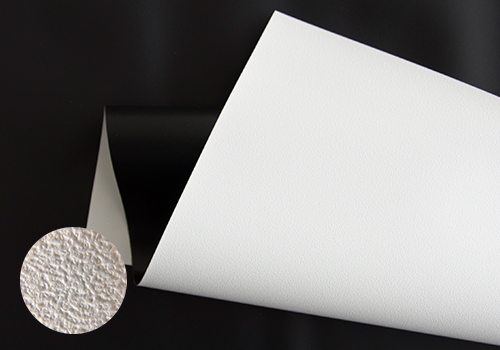
Matte White projector screens have remained a mainstay in the market for good reason. Their surface resembles a finely polished matte stone slab, using diffuse reflection to evenly distribute light across the entire viewing area. In fully light-controlled environments—such as professional home theaters or enclosed screening rooms—their color reproduction can almost replicate the original image, accurately presenting actors’ skin tones and the subtle layers of night scenes. But their Achilles’ heel lies precisely in ambient light—even a hint of light can make the image look like it’s covered in a thin mist. We once worked on a 300㎡ exhibition hall project where the client initially chose matte white screens to control costs. However, once the spotlights on the exhibition hall ceiling were turned on, the dark backgrounds in the product promotion videos turned pale, completely obscuring product details. What’s more, full light control is simply impossible in many scenarios: office blinds inevitably let in light, and lights in open workspaces can’t be turned off individually. In these cases, matte white screens perform like soldiers without shields, unable to withstand the impact of ambient light.
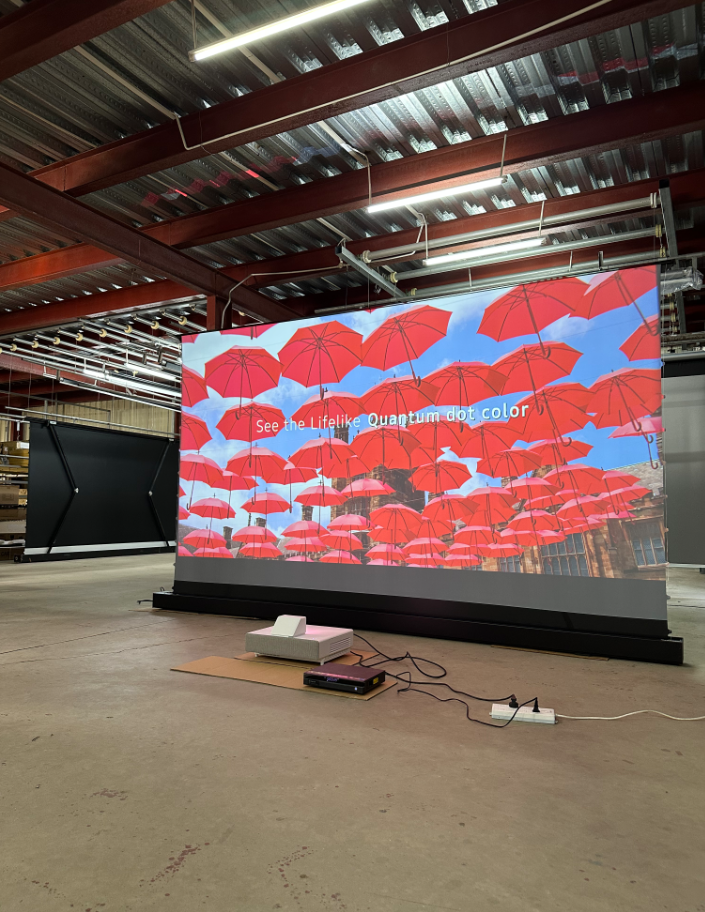
The emergence of ALR (Ambient Light Rejecting) projector screens was precisely to break this “light control dependency.” But they are by no means a one-size-fits-all technology—different ALR structures are vastly different in their application scenarios. The most mainstream Fresnel (black grid) ALR features micron-level “V-shaped grooves” on its surface. These grooves act like precisely calibrated reflectors, directing projection light only to the audience’s viewing angle, while ambient light from the sides or above is absorbed by the light-absorbing coating inside the grooves. This design is particularly suitable for ultra-short-throw projectors, such as those mounted close to walls in living rooms or small meeting rooms. Even if sunlight streams through floor-to-ceiling windows, the image remains sharp and clear. The other type, Obsidian/Grid ALR for long-throw projectors, adopts a honeycomb-shaped light-absorbing structure, making it more suitable for large spaces with projection distances over 3 meters—such as lecture halls and large conference rooms. It can reduce ambient light interference while ensuring uniform brightness at the edges of the screen, avoiding the “bright center, dark edges” effect. From the perspective of actual project experience, many buyers confuse these two technologies, but the judgment standard is actually very simple: choose Fresnel ALR for ultra-short-throw projectors and Obsidian/Grid for long-throw projectors, which can help you avoid 80% of selection mistakes.
Talking about technology alone isn’t intuitive enough. Combining the latest 2025 test data, we’ve compiled a detailed comparison of the core performance indicators of the two types of screens—you can refer directly to it when making purchases:
| Performance Indicator | Matte White Screens | ALR Screens |
|---|---|---|
| Gain | 1.0-1.3, uniform brightness at all angles | Fresnel: 0.8-1.2 (directional reflection, concentrated brightness in core area); Obsidian: 1.1-1.5 (broad-spectrum light rejection, more balanced brightness) |
| Contrast Enhancement Rate | No significant improvement, maintains original projection contrast | Fresnel: 320%-400%; Obsidian: 290%-360% |
| Viewing Angle | 175°-180°, consistent color at any angle | Fresnel: 125°-145° (optimal effect in core viewing area); Obsidian: 155°-165° |
| Color Accuracy (Delta E) | ≤1.9, close to original image colors | Fresnel: ≤2.2; Obsidian: ≤1.7 (more suitable for professional color needs) |
| Ambient Light Rejection | Weak, severe image whitening in strong light | Strong, filters 65%-85% of ambient light |
| Installation Requirements | Flexible, suitable for wall mounting, floor-standing, or recessed installation | Fresnel: needs to be close to the wall (to avoid halos); Obsidian: suitable for wall mounting/recessed installation, can be slightly bent |
| Durability (Scratch/Stain Resistance) | Average, surface prone to scratches, difficult to clean | Strong, surface with wear-resistant and stain-resistant coating, can be wiped with a damp cloth |
| Customization Adaptability | Supports customization of standard sizes, additional molds required for special shapes | Supports customization of any size/shape, custom ambient light rejecting projector screen can adapt to irregular spaces |
| Bulk Purchase Cost (100+ units) | Lower unit price, suitable for bulk purchases in fully light-controlled scenarios | ALR screen wholesale offers project pricing, making bulk customization more cost-effective |
The core logic of choosing a screen is always “scenario adaptation.” Based on the practical experience of thousands of projects, we’ve compiled a list of adaptation recommendations for high-frequency scenarios to help you avoid procurement pitfalls:
- Meeting rooms/exhibition halls/open workspaces: Prioritize Fresnel ALR. These spaces have complex light conditions that cannot be fully controlled, making it the Best screen for ambient light environments. A client of ours once used Fresnel ALR in a downtown exhibition hall—even during the brightest noon hours, the details in the product demonstration videos remained clear, and customer inquiries increased by more than 30% compared to when they used matte white screens.
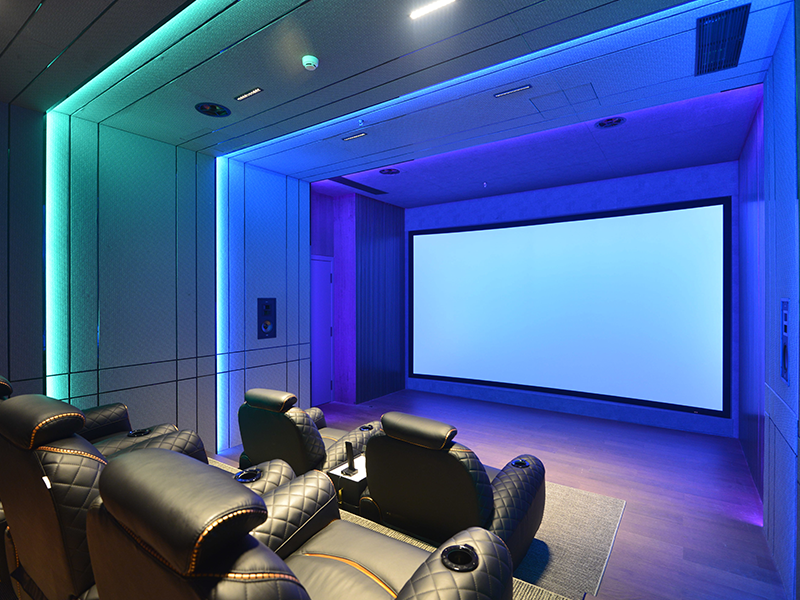
- Private home theaters/professional screening rooms: High-gain matte white screens are more suitable. These spaces can achieve full light control, and the wide viewing angle and high color accuracy of matte white screens can maximize the reproduction of the original movie quality. Moreover, they are more cost-effective than ALR screens, making them a cost-efficient choice for scenarios pursuing an immersive experience. If budget allows, you can also consider a high contrast matte white projector screen for home theater to further enhance dark detail performance.
- Multi-purpose halls (for meetings, movie viewing, training): Obsidian/Grid ALR is the optimal solution. It has a wider viewing angle than Fresnel ALR and excellent color accuracy, capable of handling the strong light environment of daytime meetings and meeting the color needs of movie playback at night. There’s no need to frequently replace the screen, which greatly reduces long-term maintenance costs.
Speaking of which, there are inevitably a few high-frequency questions during procurement—here are answers to two of the most practical ones:
- Question: “I have a long-throw projector; can I choose Fresnel ALR?” Answer: Not recommended. The directional reflection design of Fresnel ALR is tailored for ultra-short-throw projectors. Using it with long-throw projectors will result in uneven edge brightness and halos on the screen. A client once made this mistake, which led to rework and screen replacement—not only delaying the project progress but also incurring additional costs.
- Question: “ALR screens are more expensive than matte white screens when purchasing in bulk; is there a way to balance cost and performance?” Answer: You can customize the light-rejecting coating according to the light intensity of the scenario. For example, meeting rooms with weak light can use ALR screens with thin light-rejecting coatings, which cost about 20% less than full light-rejecting configurations. For exhibition halls with strong light, thicker coatings can be used to ensure uncompromised performance. As a manufacturer specializing in customization, ZSM often helps clients create such personalized solutions that meet project needs without wasting budget.
There’s another easily overlooked point: long-term maintenance costs. In office environments, screens are inevitably bumped by desks and chairs or scratched by cleaning staff. The wear-resistant and stain-resistant coating of ALR screens is more durable than that of matte white screens, resulting in lower maintenance costs over time. In home theaters, matte white screens can also have a long service life as long as they are protected from sharp objects— the key is to anticipate the wear and tear of the usage scenario to choose the most worry-free product.
Choosing a Projector Screen is never about “the most advanced technology,” but about “the best fit for your needs.” Light conditions, projector type, usage scenario, and even daily maintenance habits all affect the final user experience. If you’re unsure, feel free to discuss the details of your actual scenario with the manufacturer—such as the orientation of meeting room windows, the installation distance of the projector, or whether you need to customize special sizes in bulk. After all, the screen is the “last mile” of the projection system. Choosing the right one can truly bring out the performance of the equipment, instead of letting ambient light become a “stumbling block” affecting the experience. If you need customization recommendations for ALR projector screen for office meetings or high gain matte white projector screen, feel free to communicate anytime, and we’ll provide more precise solutions based on your specific needs.
 Scan QR Code
ZSMSCR Facebook
ZSMSCR Instagram
ZSMSCR X
ZSMSCR YouTube
ZSMSCR TikTok