

I. Immersive Projection Boom: Screen Demand Behind 2025 Market
The global naked-eye 3D market has exceeded $50 billion in 2025, with China contributing nearly 40% of the share . As a core supporting technology, immersive projection is penetrating from traditional venues to full scenarios. Unlike standardized screens, custom screens have become a necessity in science museums, real estate and other fields through material adaptation, size optimization and environmental integration. A museum saw a 62% increase in exhibit interaction rate after adopting a circular custom screen, confirming the industry logic of “content is king, carrier is foundation”.
II. 6 Application Scenarios & Custom Solutions
| Scenario | Custom Core Requirement | Recommended Material | Effect Case |
|---|---|---|---|
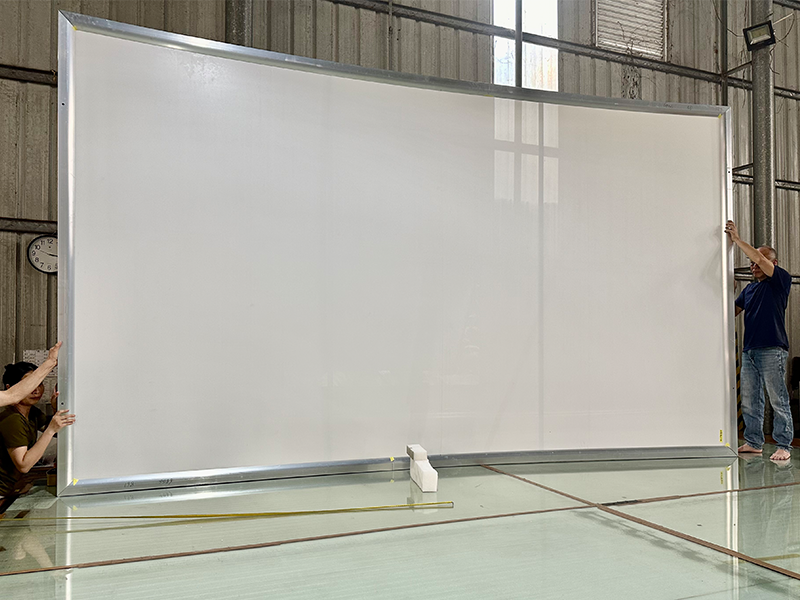
| Museum/Science Hub | Light resistance + 160°+ view | Glass fiber screen (1.3 gain) | 360° projection of paleontology exhibits |
| Real Estate Gallery | Quick installation + foldable | Portable white plastic screen | Dynamic apartment display in pop-up booths |
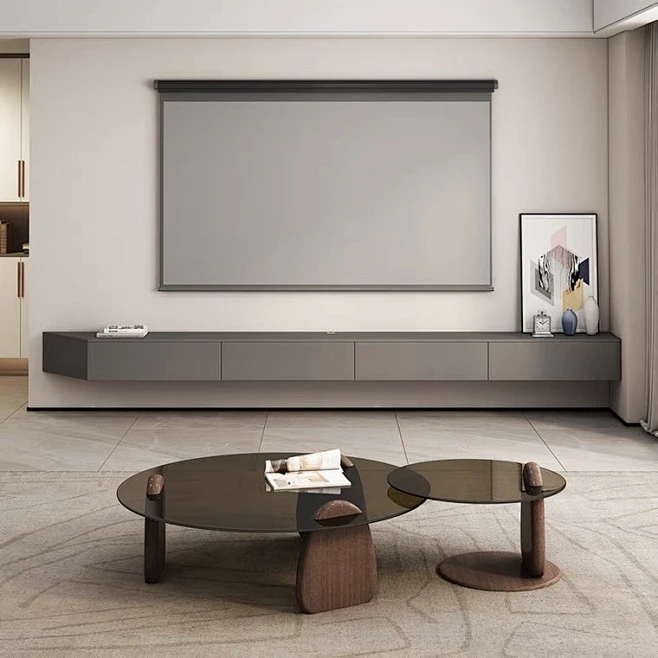
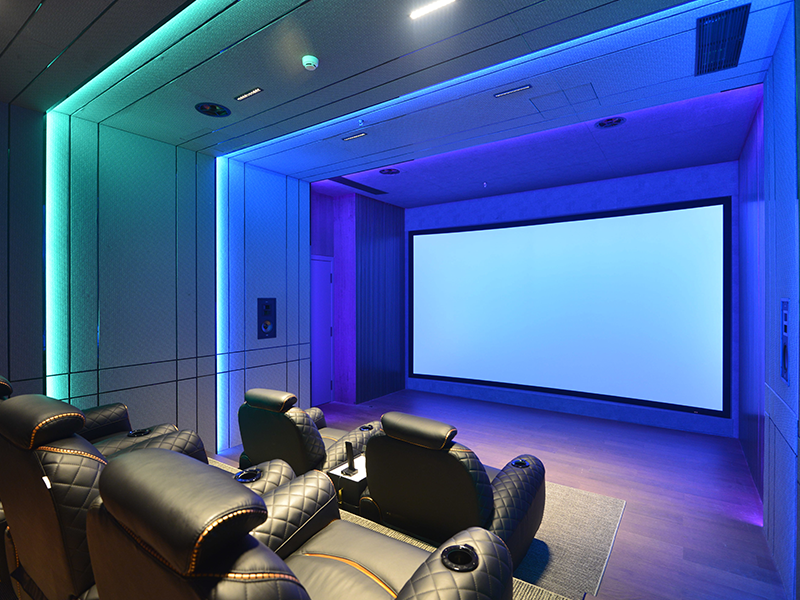
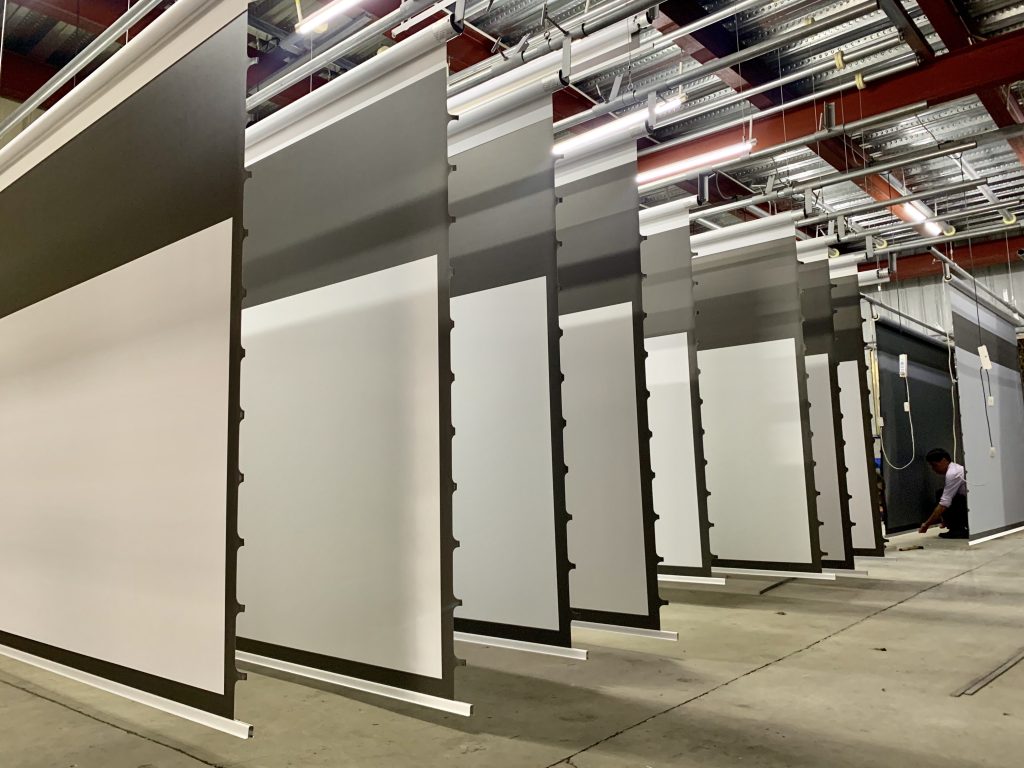
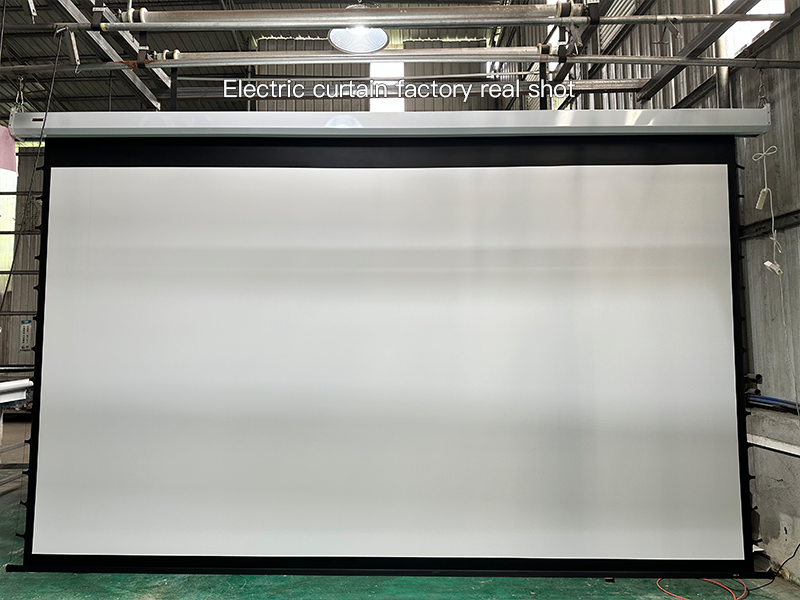
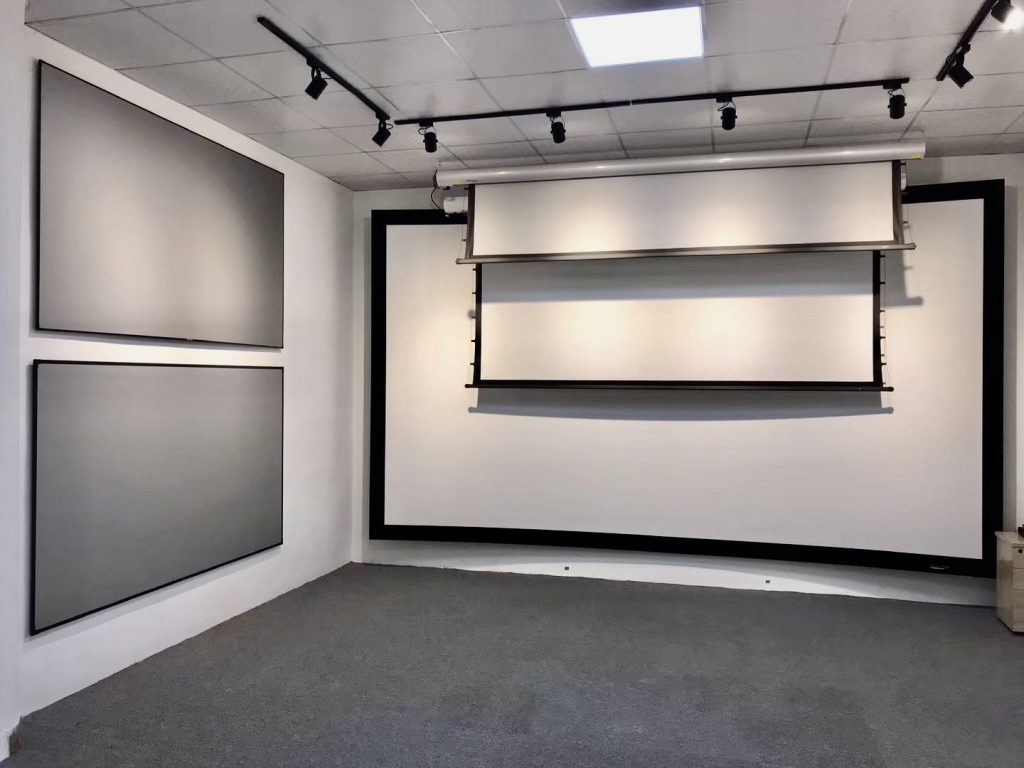
| Home Theater | Hidden design + high contrast | Gray plastic frame screen | Living room retractable screen for movie/guest mode |
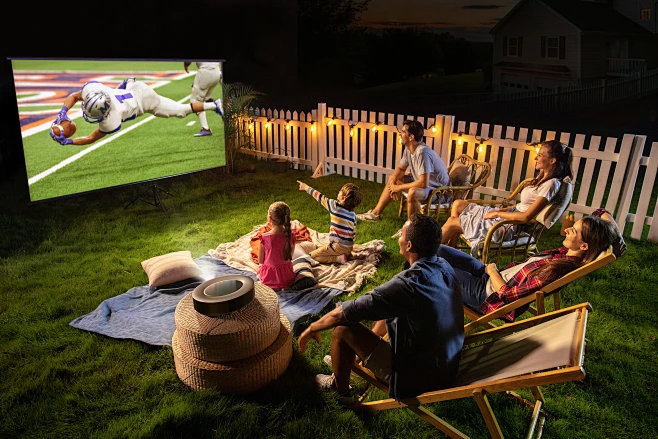
| Night Tour Scenic | Waterproof + outdoor anti-glare | Thickened PVC screen | Mountain projection with no rain distortion |
| Command Center | 24h stable + 4K display | Metal hard screen | Real-time data with <10ms response delay |
III. 4 Core Advantages of Custom Screens (2025 Upgrade)
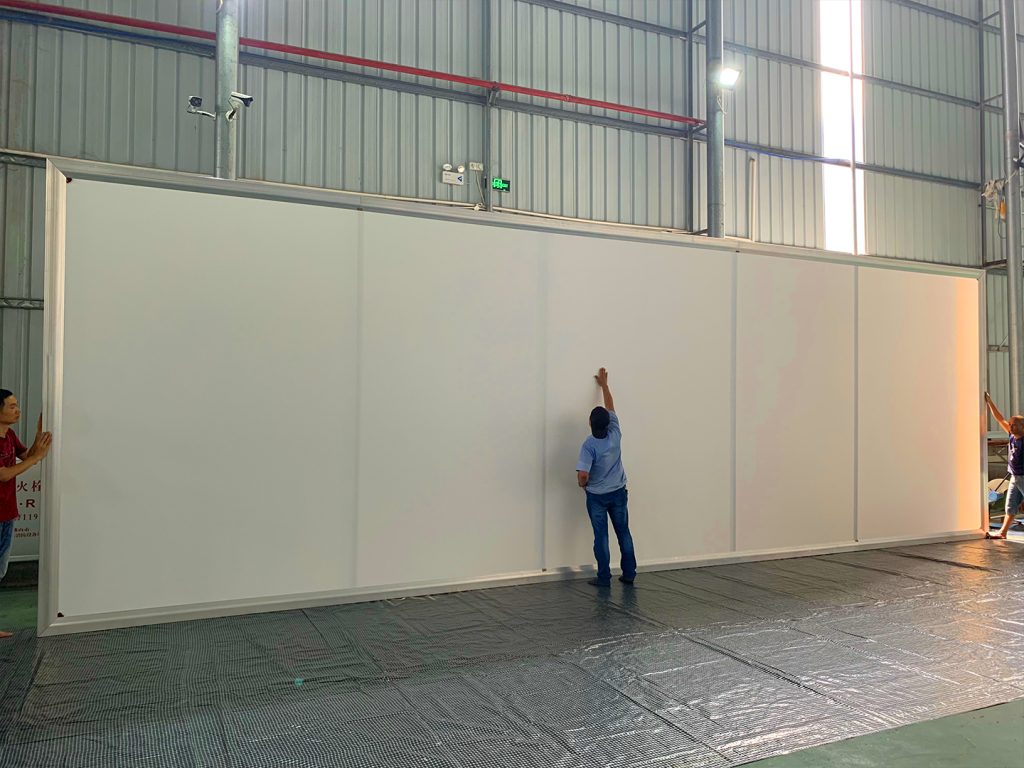
- Seamless joint Nano-level edge blending technology reduces splicing error to <0.1mm, maintaining integrity even for 100㎡ screens with 300% stronger visual impact.
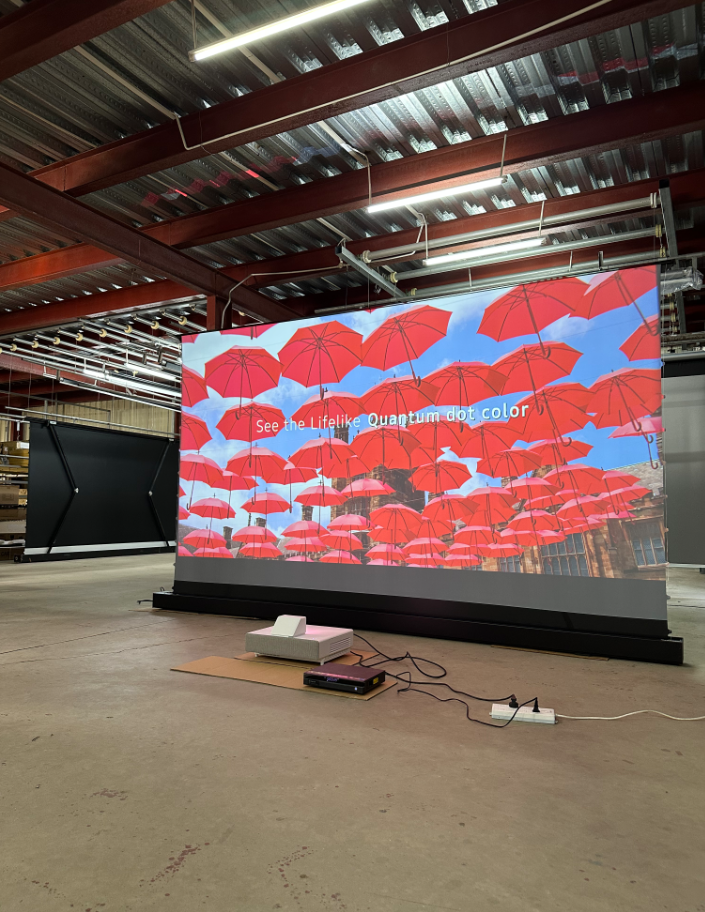
- Resolution Adaptation4K/8K signal compatibility enables 16K ultra-HD display via multi-projector overlay, solving “large-screen blur” issues .
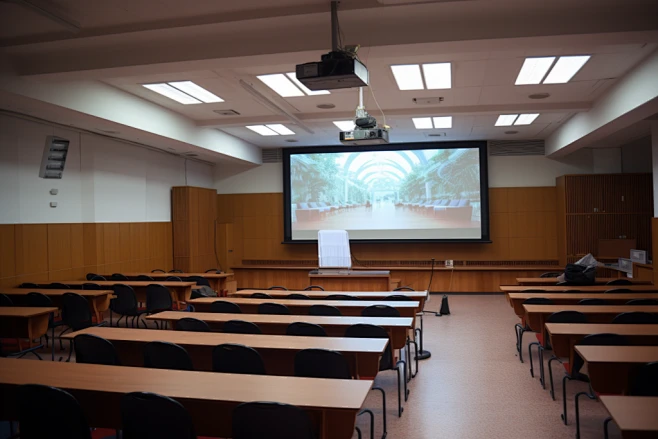
- Environment MatchingCoating customized by light sensor data: high-gain glass fiber (1.1-1.3) for meeting rooms, low-gain gray screen (0.8-1.0) for home theaters.
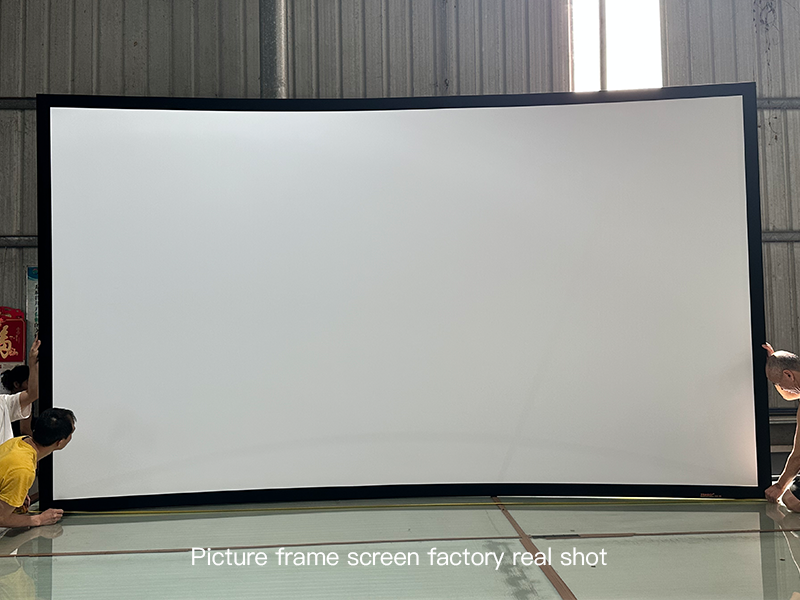
- Scenario InteractionCurved museum screens and irregular KTV screens support touch/voice control, like “wave to switch exhibits”.
IV. FAQ
Q1: Material or size priority with limited budget?
A: Based on “screen gain × projector brightness = actual brightness” , choose 100-inch glass fiber screen (1.1 gain) with 1000-lumen projectors first, no need for oversized screens.
Q2: Why avoid cheap anti-glare screens outdoors?
A: Cheap ones use gray paint (0.3-0.5 gain) causing 70% brightness loss; custom outdoor screens with micro-structures block 80% ambient light.
Q3: Cost difference vs standard screens?
A: 20% premium for basic customization, but 40% lower maintenance cost for complex scenarios (spherical/flexible screens).
V. Future Trend: Eco + Smart Revolution
Biodegradable coatings and light-sensing adjustment are launching in 2025 . We’ve launched “carbon-neutral solutions” using recycled plastic fibers for scenic spots and hotels.
 Scan QR Code
ZSMSCR Facebook
ZSMSCR Instagram
ZSMSCR X
ZSMSCR YouTube
ZSMSCR TikTok