
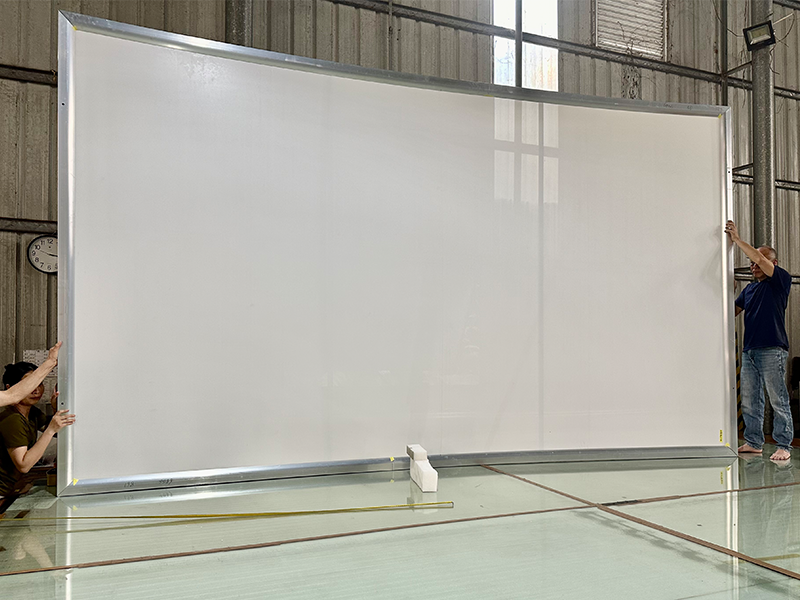
Whether you’re creating an immersive home theater for weekend movie nights, equipping a corporate conference room with efficient presentation equipment, or setting up an interactive teaching environment in a school classroom, the projection screen—as the core carrier for image display—directly determines the final user experience. As projection technology advances from 1080P to 4K and 8K, custom projection screens are no longer a “special need” but a standard choice to meet diverse spatial and image quality requirements. However, most people only focus on size when customizing, while ignoring key details such as material properties, installation environment, and device compatibility, leading to subpar results.
To customize a projection screen effectively, the core principle is “scenarios determine needs.” Performance requirements for screens vary significantly across different scenarios. Below are the 2025 customization key points for mainstream scenarios, with the addition of the educational scenario to cover broader needs:
| Usage Scenario | Recommended Screen Type | Core Material Features | Key Parameter Recommendations (2025 Industry Standards) | Installation Suggestions | 2025 User Selection Ratio |
|---|---|---|---|---|---|
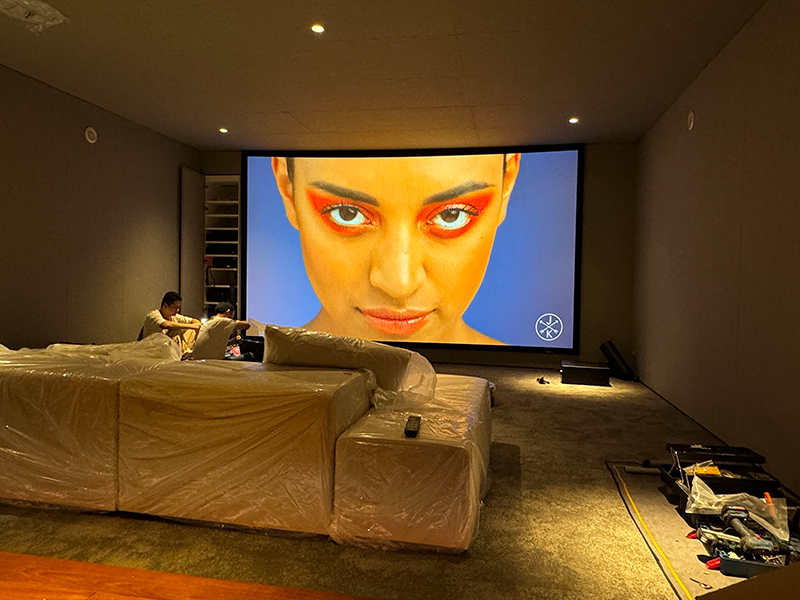
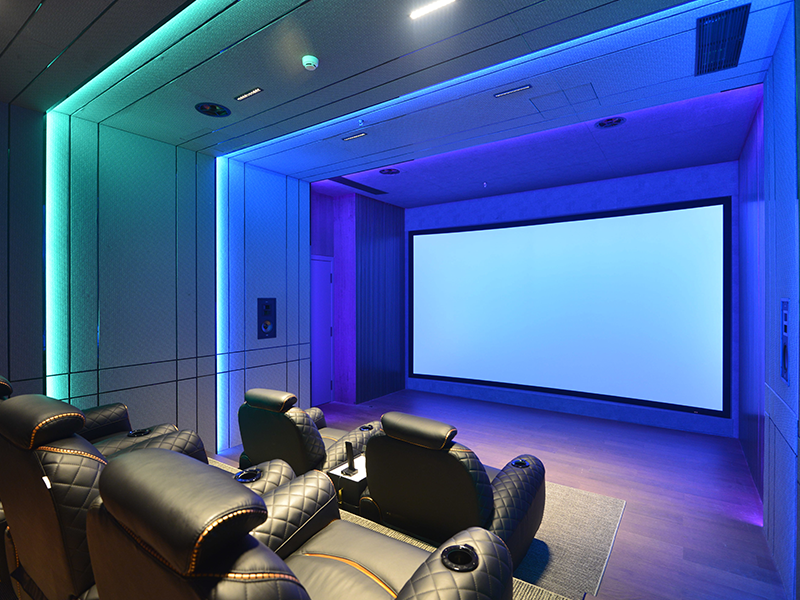
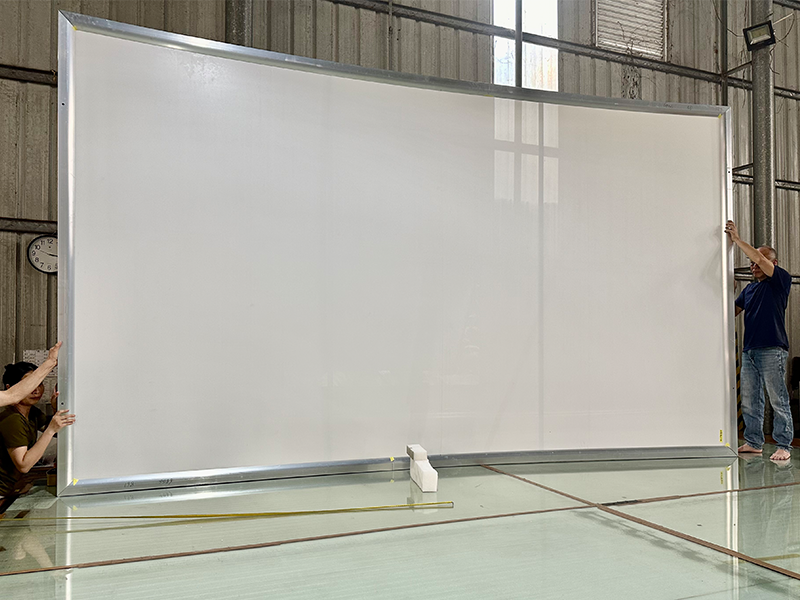
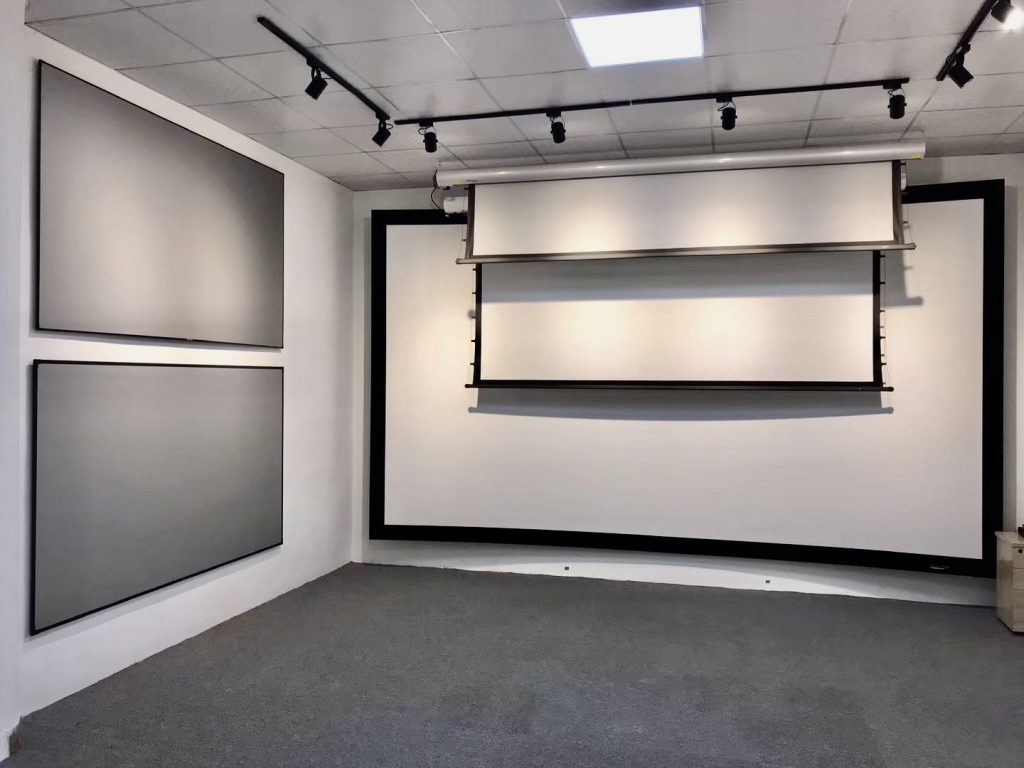
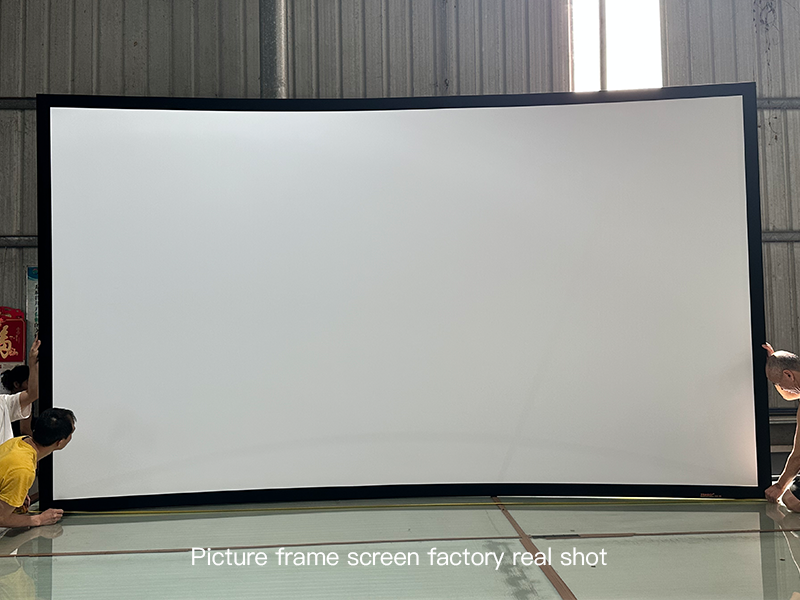
| Home Theater | Curved Glass Fiber Screen | High contrast (≥5000:1), low gain (0.9-1.1), restores dark details without whitening | Aspect ratio prioritizes 2.35:1 (wide-format movie compatibility); 4K devices suggest 8K-compatible materials | Fixed and embedded in ceiling/wall, reserve screen grooves, avoid direct strong light | 42% |
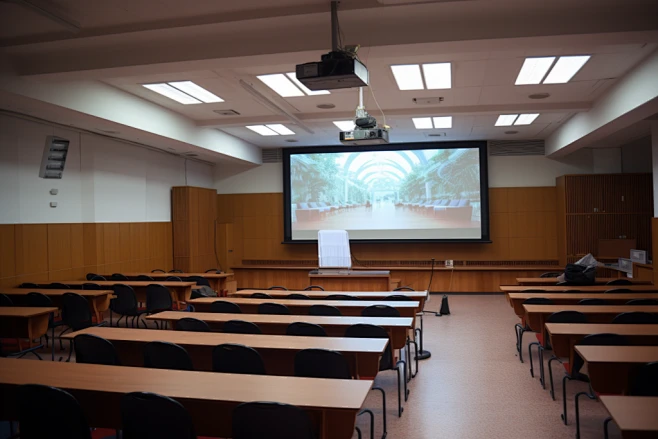
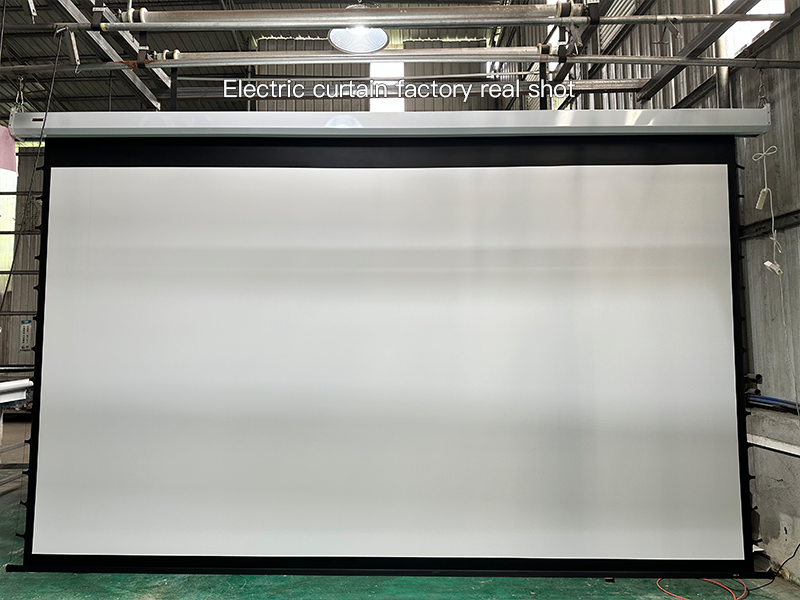
| Small & Medium Conference Rooms | Electric White Plastic Screen | Wide viewing angle (≥160°), easy to clean (stain-resistant coating), suitable for multi-person, multi-angle viewing | Gain 1.2-1.5 (ensures clarity for back-row viewers), supports fast lifting/lowering (saves meeting time) | Ceiling-mounted, paired with remote control/smart linkage (e.g., synchronized on/off with projector) | 35% |
| Outdoor Activities (e.g., Camping) | Portable Folding Screen | Waterproof (IP65 rating), wear-resistant, windproof (built-in weight), weight ≤3kg (easy to carry) | Screen width 1.5-2m (compatible with small projectors), material thickness ≥0.3mm (tear-resistant) | Used with adjustable stands, install on flat ground, avoid proximity to water sources | 8% |
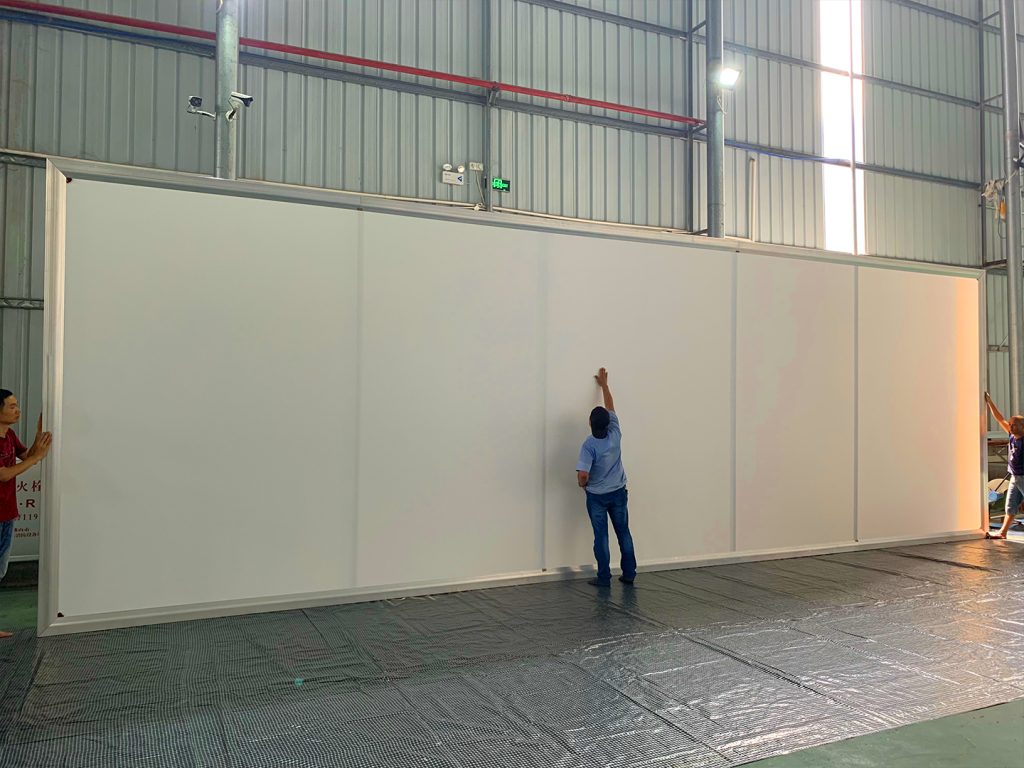
| Professional Exhibition Halls | Metal Hard Screen | High gain (2.0-2.5), high color saturation (Rec.709 color gamut coverage ≥95%), suitable for strong light environments | Flatness error ≤1mm/m (prevents image distortion), supports seamless splicing (for large exhibition halls) | Fixed wall installation, requires pre-wall leveling, paired with frame decoration for improved aesthetics | 8% |
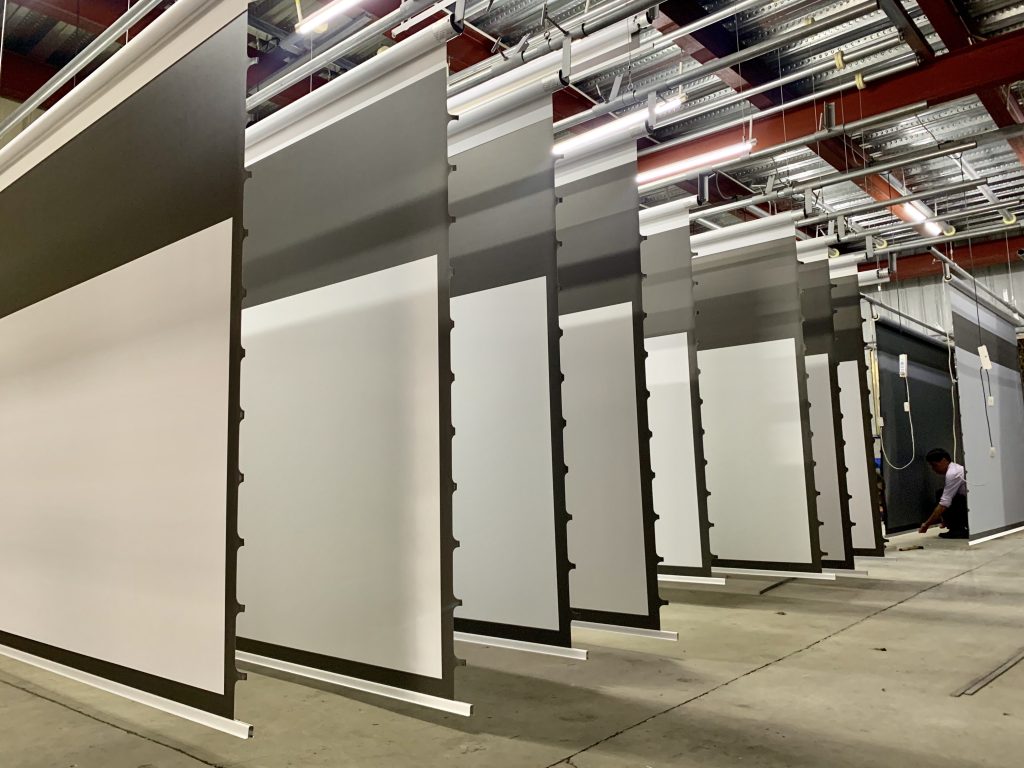
| Educational Institution Classrooms | Interactive Anti-Light Screen | Anti-light performance (ambient light rejection rate ≥80%), touch support (10-point touch response), suitable for teaching interaction | Screen height ≤1.8m (easy for students to view), scratch-resistant material (≥3H hardness) | Wall-mounted, bottom distance from ground 0.8-1m, reserve wiring ports for touch devices | 10% |
During the actual customization process, users often have questions about details. In addition to the previous basic questions, here are two more in-depth common concerns:
Q1: Must I measure the space size in advance before customizing a screen? What details should I pay attention to when measuring?
A: Measurement is essential! Focus on three core dimensions: First, the viewing distance (straight-line distance from the audience seat to the screen), following the formula “screen width = viewing distance × (1/4 ~ 1/2)”. For example, a 3-meter viewing distance is suitable for a 1.2-1.5m wide screen, while a 5-meter distance fits a 2-2.5m wide screen. An overly wide screen will exceed the field of view, while an overly narrow one loses immersion. Second, the net size of the installation area, which requires deducting space occupied by wall decorations and sockets. For instance, if the total wall width is 3m and there is a 0.2m wide baseboard, the actual installable screen width must be ≤2.8m. Third, the projector’s throw ratio (projection distance ÷ screen width). For mainstream projectors with a throw ratio of 1.2:1 ~ 1.8:1, if the projection distance is fixed at 4m, the screen width can be between 2.2-3.3m. A mismatched throw ratio will result in the image failing to fill the screen or exceeding it.
Q2: My home has bright daylight—what material should I choose for a custom screen to reduce glare? Do I need to pair it with anti-light equipment?
A: Prioritize custom projection screens with anti-light materials. Currently, the mainstream anti-light types on the market fall into two categories: First, micro-structured anti-light screens. Through a prism-like coating on the screen surface, they reflect ambient light to non-viewing areas. Even without drawing curtains during the day, the image contrast can remain above 3000:1, making them suitable for living rooms and other spaces without light control. However, note that the optimal viewing angle for such screens is ≤45°, so they are not ideal for large living rooms with scattered viewers. Second, Fresnel anti-light screens. Through concentric circular textures, they concentrate projection light and filter ambient light, with a viewing angle of up to 80°, suitable for larger spaces—but their price is 20%~30% higher than micro-structured anti-light screens. If on a budget, you can also choose a light gray glass fiber screen (with 40% higher contrast than white screens) paired with simple light-blocking curtains (e.g., magnetic blinds). This low-cost solution improves glare issues without the need for additional professional anti-light equipment, avoiding overinvestment.
Q3: What should I pay attention to regarding the customization timeline and after-sales support for custom screens? How to avoid disputes later?
A: The 2025 industry average customization timeline is 7~15 days (excluding logistics). However, note that special materials (e.g., metal hard screens, extra-large screens) will extend the timeline to 20~30 days. It is recommended to confirm the delivery time with the merchant in advance and include a “delay compensation clause” in the contract (e.g., 0.5% of the contract amount per day as compensation). For after-sales support, focus on three points: First, installation guarantees. Require the merchant to provide free on-site installation (especially for embedded or ceiling-mounted setups) and commit to free rework within 30 days if falling or flatness issues occur after installation. Second, material warranty. Glass fiber screens and white plastic screens should have a warranty of ≥2 years, while metal screens and anti-light screens should have ≥3 years. Avoid “verbal promises”—ensure this is written into the contract. Third, return/refund policies. Confirm a “7-day no-questions-asked return/refund for unused, undamaged products” to prevent being unable to claim rights if receiving a product that does not meet customization requirements.
In addition, customization strategies should be flexible based on different budgets:
- Low budget : Prioritize size adaptation. Choose white plastic screens or basic glass fiber screens, and manual lifting installation (30% cheaper than electric). Suitable for temporary use or small spaces with limited budgets.
- Medium budget : Balance material and functionality. Select anti-light glass fiber screens or entry-level metal screens, paired with electric remote control installation, supporting simple linkage with projectors. Suitable for home theaters and small-to-medium conference rooms.
- High budget : Pursue image quality and experience. Choose high-end metal hard screens or Fresnel anti-light screens compatible with 4K/8K, paired with smart lifting (connectable to smart home systems), and require the merchant to provide on-site surveys and customized installation plans. Suitable for professional exhibition halls, large conference rooms, and high-end home theaters.
Customizing a projection screen is not a “one-time purchase” but a systematic choice that integrates space, equipment, and needs. Only by considering details such as scenario adaptation, parameter matching, and after-sales support can the custom screen truly deliver value and avoid “wasting money on disappointment.
 Scan QR Code
ZSMSCR Facebook
ZSMSCR Instagram
ZSMSCR X
ZSMSCR YouTube
ZSMSCR TikTok