
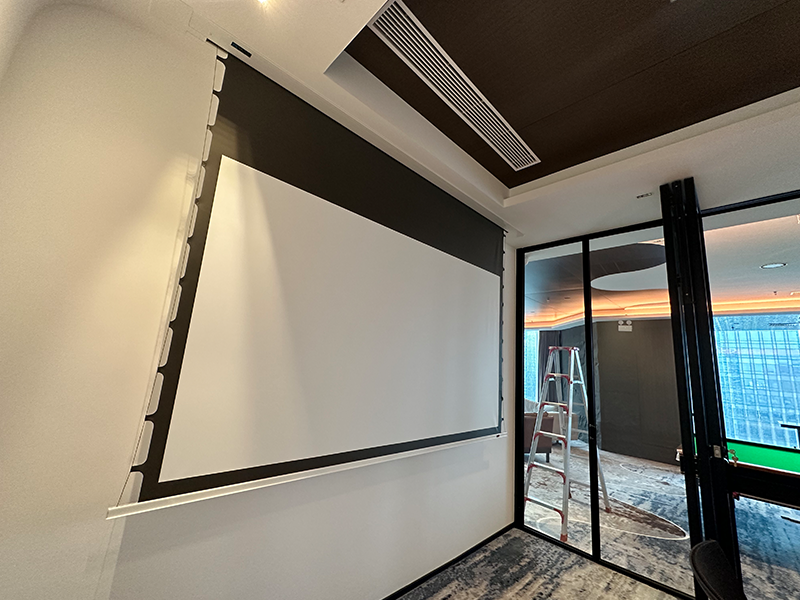
In 2025’s fast-paced business landscape, Commercial Projection Screen has become an indispensable tool for enterprise visual communication upgrade. Whether it’s client presentations, exhibition launches, or remote training, a high-quality Commercial Projection Screen is the core of effective communication, directly affecting the professionalism and communication efficiency of enterprises. Unlike home projection screens, commercial-grade projection screens must withstand frequent use, adapt to diverse venues, and maintain stable imaging—no business wants a subpar screen to damage its professional image.
What makes a Commercial Projection Screen enterprise-ready? The key lies in “scenario adaptation,” among which customization and material selection are the core factors. Below is a detailed analysis of the core materials, market trends, purchasing FAQs, and practical tips for 2025 Commercial Projection Screen, helping enterprises choose the most suitable products.
I. Core Material Comparison for Commercial Projection Screens
| Material Type | Core Advantages | Application Scenarios | 2025 Market Share | Key Notes |
|---|---|---|---|---|
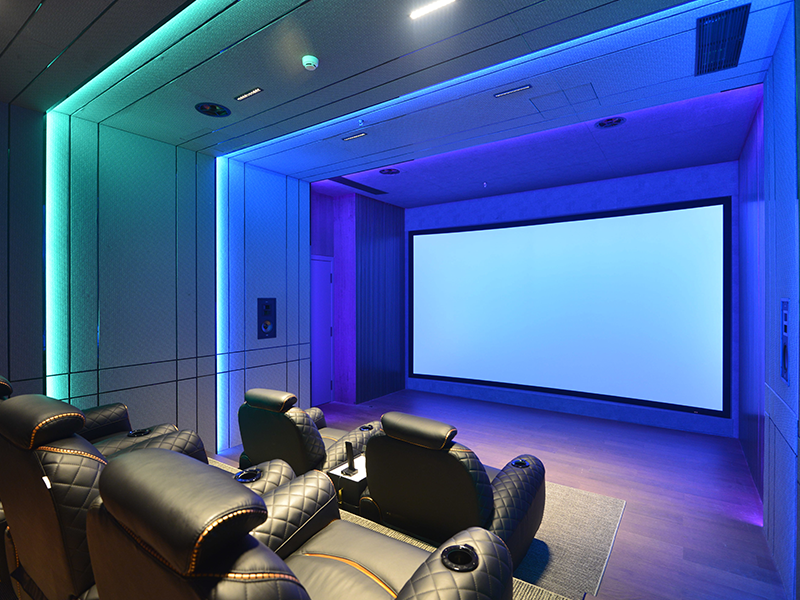
| Fiberglass Commercial Projection Screen | High color reproduction, sharp image, wear-resistant, and not easy to deform | Data analysis meetings, design scheme presentations, high-definition video playback | 42% | Suitable for fixed conference rooms with stable light |
| High-Gain Metal Commercial Projection Screen | Strong anti-glare performance, effectively boosting image brightness, waterproof and dustproof | Open offices, semi-outdoor exhibitions, large-scale product launches | 35% | Ideal for bright environments without additional light shielding |
| Anti-Glare Commercial Projection Screen | No light shielding needed, high contrast, clear imaging in strong light | Bright conference rooms, store window displays, public lecture halls | 18% | Cost-effective, suitable for SMEs with limited venue transformation conditions |
| Portable Wrinkle-Resistant Commercial Projection Screen | Lightweight, easy to store and carry, quick to set up, wrinkle-resistant after folding | Mobile client pitches, on-the-go training, temporary exhibition booths | 5% | Matching portable commercial projection screen stand for more convenient use |
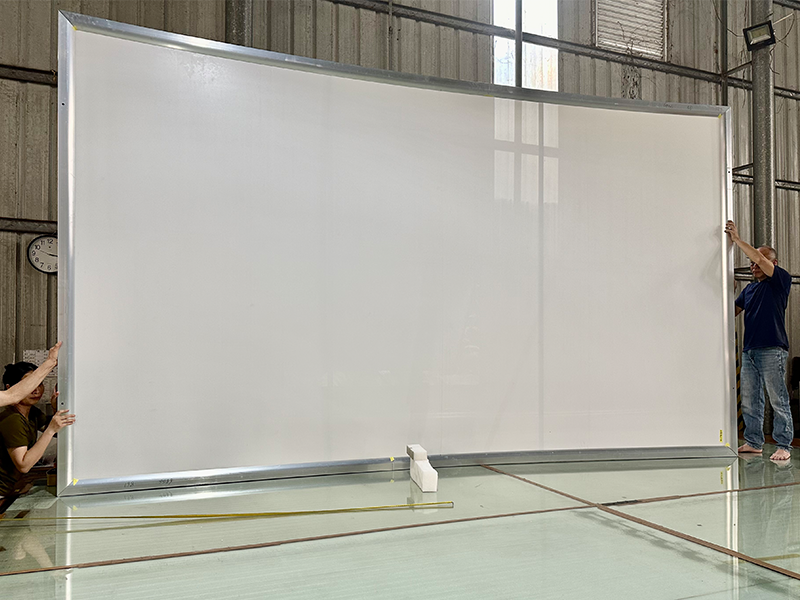
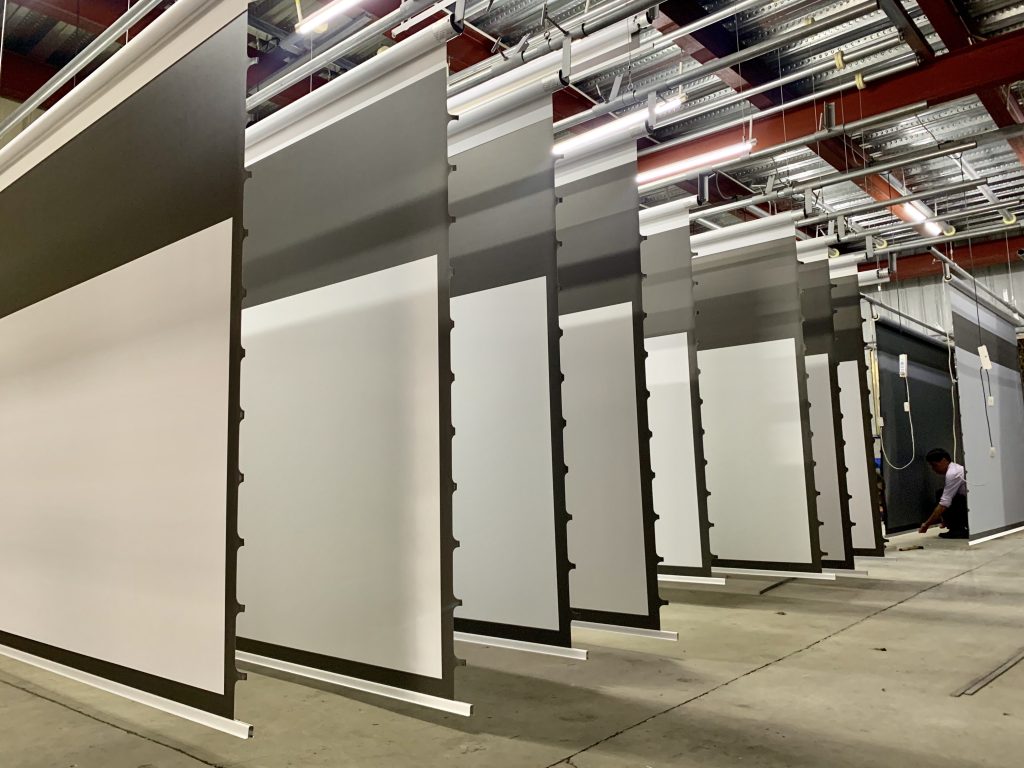
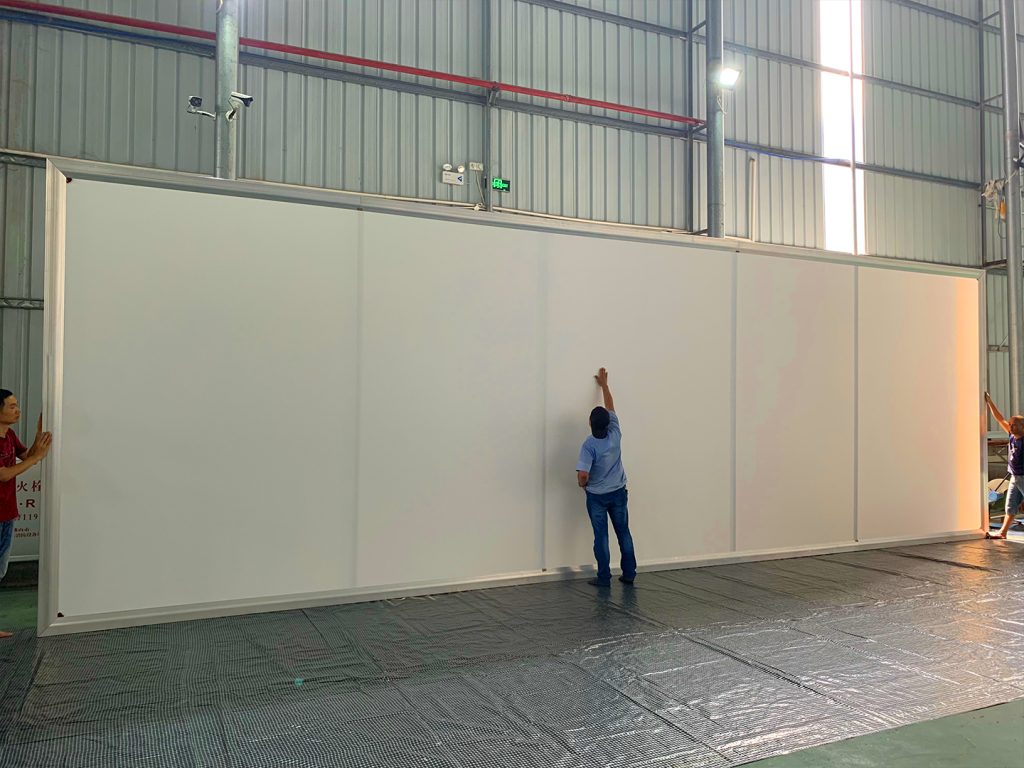
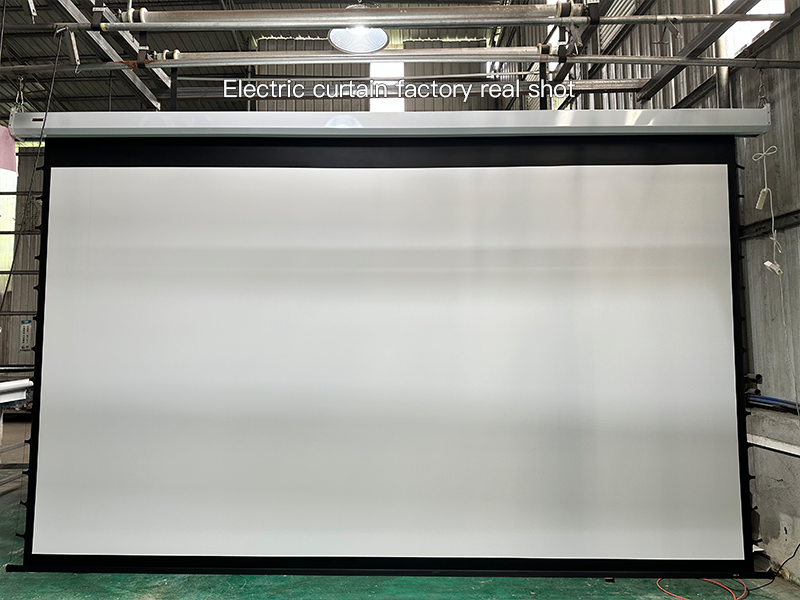
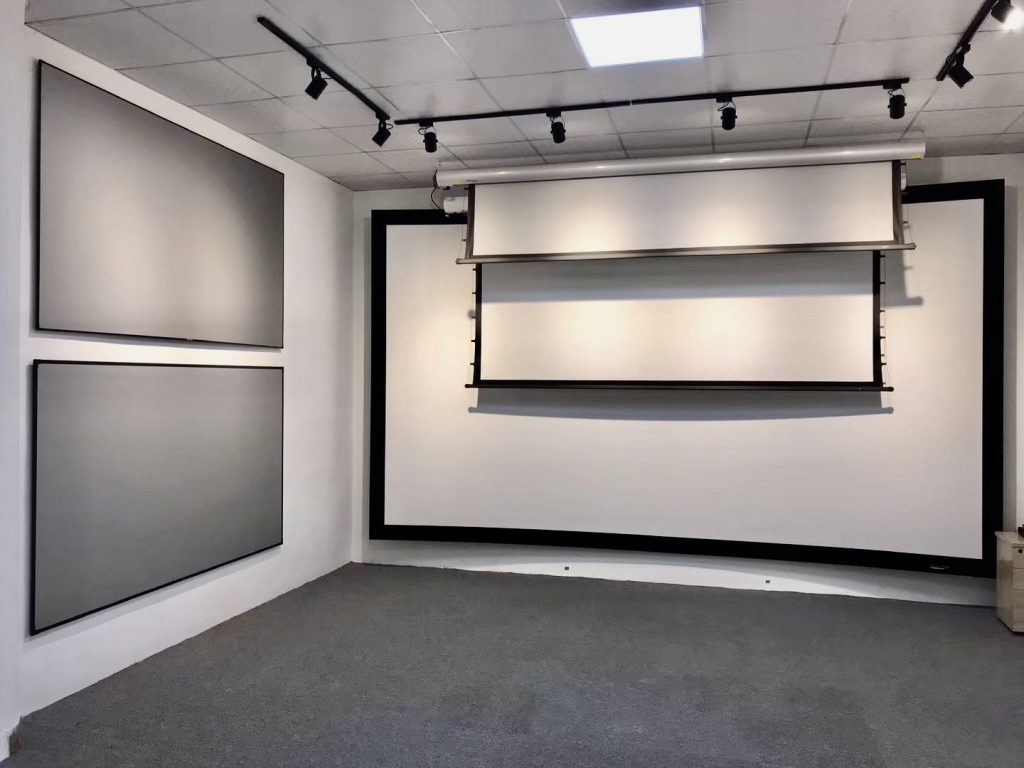
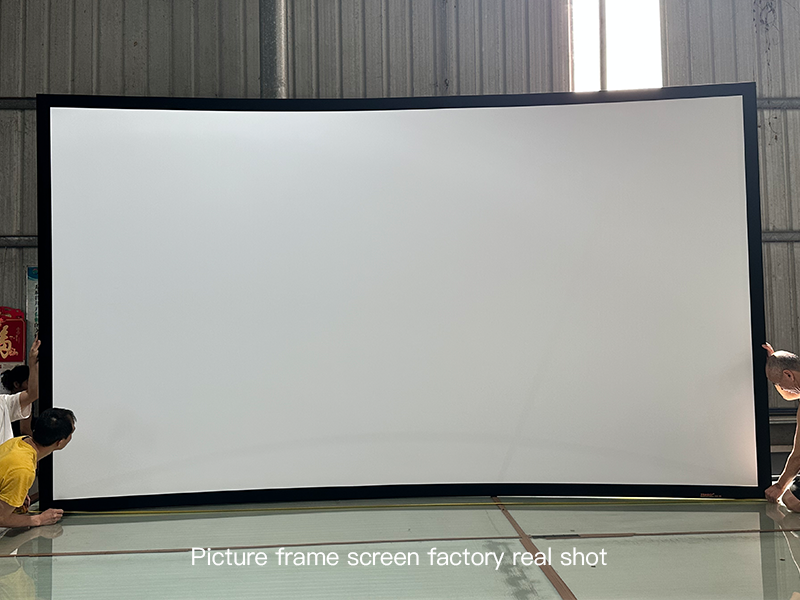
Customization is crucial for Commercial Projection Screen—meeting rooms and exhibition booths vary in size and shape. Enterprises can customize Custom Commercial Projection Screen from 80-inch compact models to 400-inch curved ones, ensuring a perfect fit for the venue and maximizing visual effects. For special venues, such as irregularly shaped conference halls, customized curved screens can effectively avoid image distortion.
II. 2025 Market Key Highlights
- Global market size of Commercial Projection Screen reaches $3.2 billion, with a year-on-year growth of 6.8%;
- Portable Commercial Projection Screen grows rapidly, with a year-on-year increase of 37%, driven by the hybrid work model;
- 4K/HDR compatible Commercial Projection Screen accounts for over 70% of enterprise purchases, becoming the mainstream choice;
- Customization costs of Commercial Projection Screen decrease by 15%, making it more accessible for small and medium-sized enterprises (SMEs);
- Smart touch-integrated Commercial Projection Screen grows at an annual rate of 52%, aligning with the digital transformation trend of enterprises;
- Wear-resistant and easy-to-maintain Commercial Projection Screen is favored by enterprises with high-frequency use needs.
III. Embedded FAQs for Commercial Projection Screen Purchase
When purchasing Commercial Projection Screen, many enterprises have doubts about product selection and use. Below are the most common questions and professional answers to help you make rational decisions:
Q: Is higher gain always better for Commercial Projection Screen? No. High-gain (≥1.8) Commercial Projection Screen can effectively boost image brightness, but it will narrow the viewing angle. For large halls with audiences on the side, medium-gain Commercial Projection Screen is more suitable, which can balance brightness and viewing effect, ensuring that every audience can see clear images.
Q: How long is the service life of Commercial Projection Screen, and how to extend it? Under proper maintenance, the service life of Commercial Projection Screen is 5-8 years. To extend its service life, it is recommended to choose durable fabrics (avoid cheap vinyl materials) and rust-resistant metal frames; at the same time, avoid frequent folding (for portable models) and clean it with a soft cloth regularly. Most regular brands provide a 3+ year warranty for Commercial Projection Screen, which can be preferred when purchasing.
Q: How to choose the aspect ratio of Commercial Projection Screen according to the industry? The choice of aspect ratio is closely related to the industry’s daily use scenarios. The specific recommendations are as follows:
| Industry Type | Recommended Aspect Ratio | Key Reason |
|---|---|---|
| Internet/Finance | 16:9 | Fits PPT presentations, video conferences, and data visualization reports commonly used in the industry |
| Architecture/Engineering | 4:3 | Matches technical drawings, CAD files, and design blueprints, avoiding image stretching and distortion |
| Exhibitions/Events | 21:9 | Provides immersive wide-screen display effect, suitable for product demos and brand image promotion |
| Education/Training | 16:10 | Balances courseware display and note-taking needs, improving training efficiency |
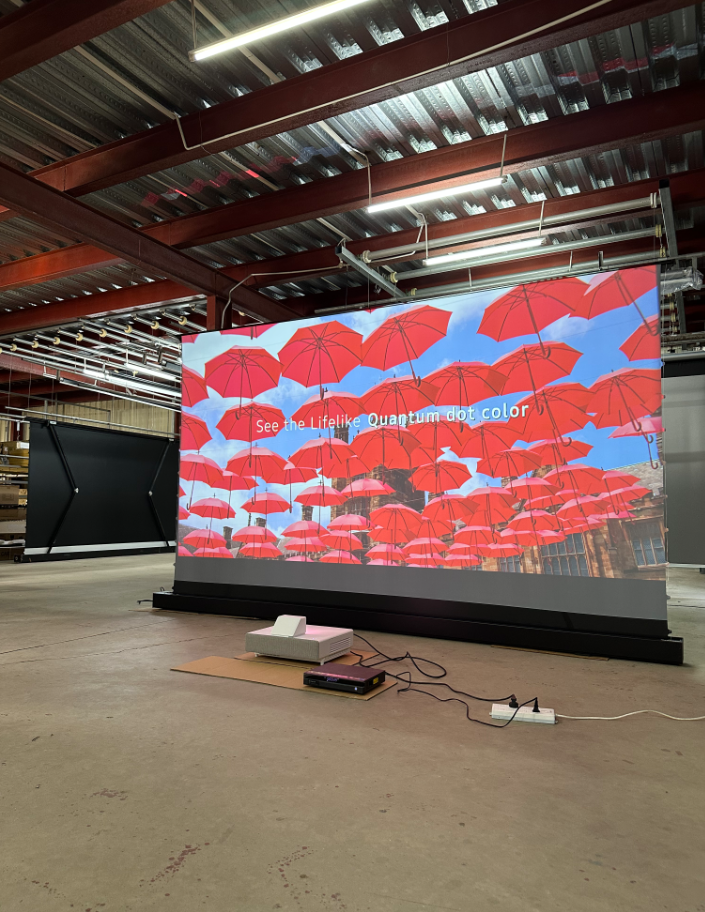
Q: What should be paid attention to when matching Commercial Projection Screen with projectors? The matching of Commercial Projection Screen and projector directly affects the imaging effect. 4K projectors must be matched with 4K-compatible Commercial Projection Screen to exert the high-definition effect of the projector; for short-throw projectors, it is recommended to choose a screen with anti-reflection function to avoid image blurring. In addition, the size of the screen should be matched with the projection distance of the projector to ensure that the image fills the entire screen without black borders.
IV. 2025 Purchasing Tips for Commercial Projection Screen
- For high-frequency use (≥2x/day): Choose Commercial Projection Screen with metal frames + wear-resistant fabrics, which are more durable and suitable for long-term frequent use;
- Installation method: Choose wall-mounted/embedded Commercial Projection Screen for fixed spaces (such as conference rooms); choose portable Commercial Projection Screen for mobile needs (such as on-site client presentations);
- Match with projectors: 4K projectors need to be paired with “4K-compatible” Commercial Projection Screen; short-throw projectors are suitable for anti-reflection screens;
- Maintenance considerations: PrioritizeCommercial Projection Screen with washable fabrics and 3+ year warranties, which can reduce later maintenance costs;
- Customization needs: For special venues, communicate with professional manufacturers in advance to customize Custom Commercial Projection Screen that meets the venue size and use needs.
In 2025, Commercial Projection Screen is no longer a luxury, but an essential investment for enterprises to enhance professionalism and communication efficiency. Whether you are a startup or a multinational enterprise, choosing the right Commercial Projection Screen can effectively elevate the effect of presentations, training, and brand promotion. For more professional advice on 2025 Commercial Projection Screen selection, customization, and after-sales service, you can contact our company zsm for detailed consultation.
 Scan QR Code
ZSMSCR Facebook
ZSMSCR Instagram
ZSMSCR X
ZSMSCR YouTube
ZSMSCR TikTok