
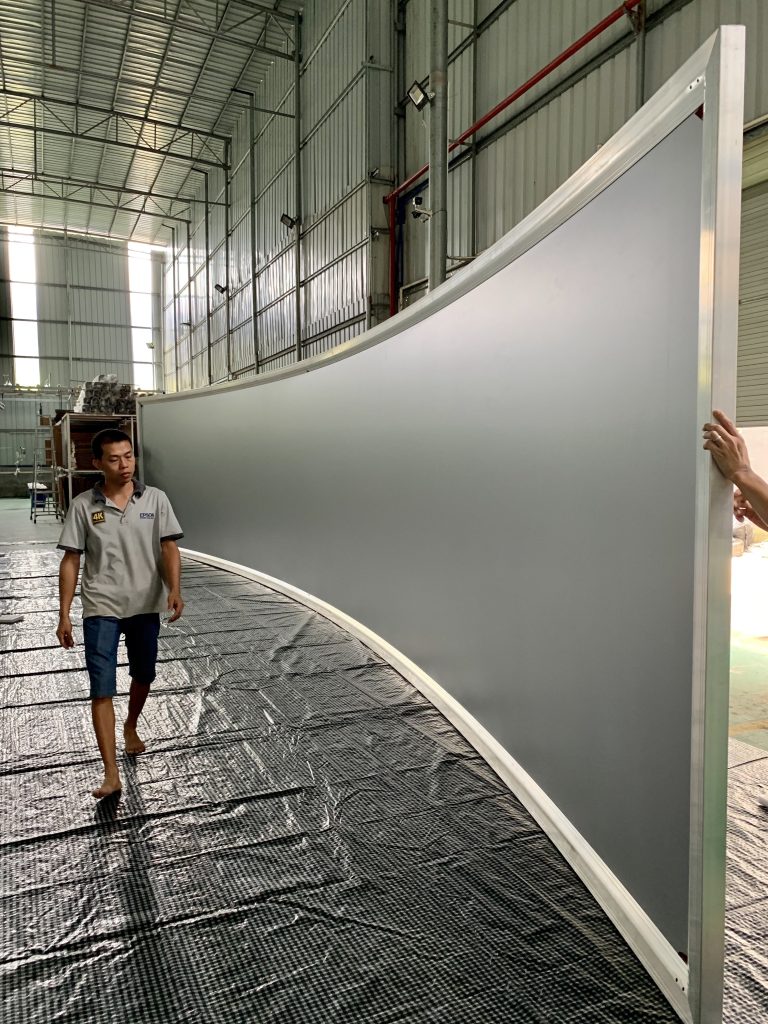
When choosing Projection Screens, most people focus only on surface color and size, overlooking that the projection screen base material is the core factor determining image quality and service life. Seventy percent of the value of a high-quality projection screen lies in its invisible base material; for a 4K projection screen of the same specification, choosing the right base material can double the image effect and durability. As a factory specializing in custom screen production, we explain the core differences between the three mainstream base materials—PVC, fiberglass, and PET—from the perspective of production technology and practical application, helping you select the right screen accurately without mistakes.
PVC: The Flexible All-Rounder, a Cost-Effective Choice for home tab-tensioned projection screens
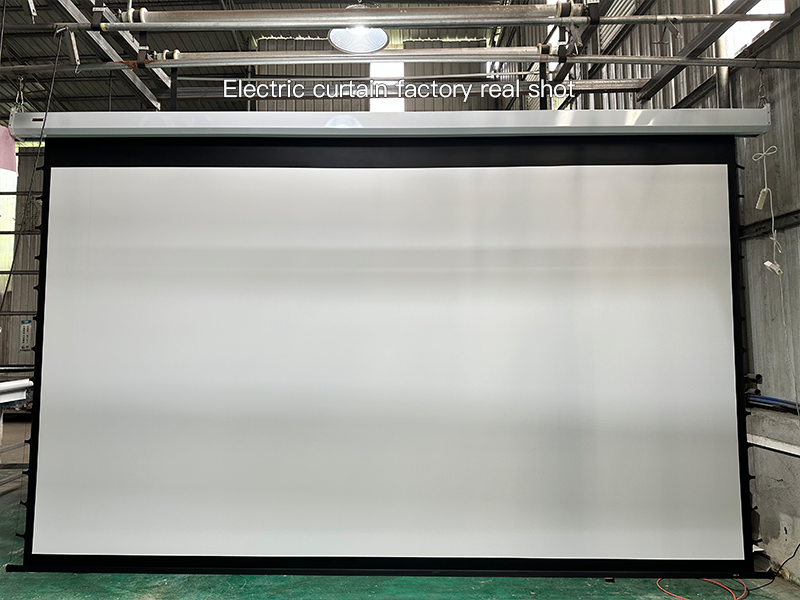
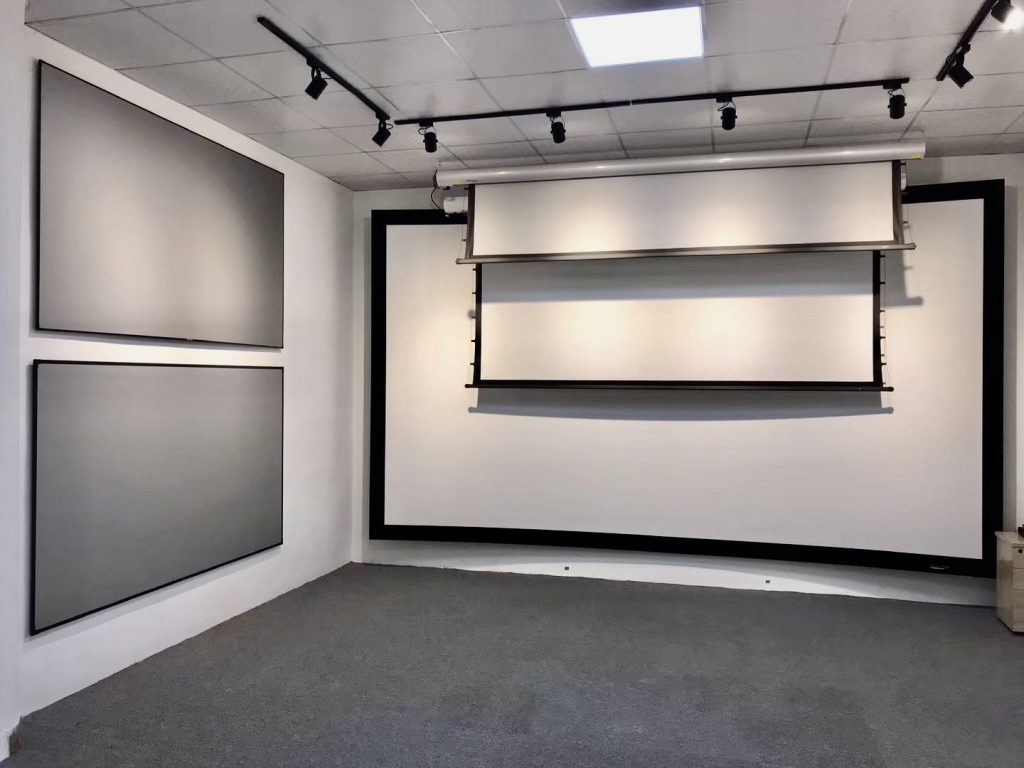
PVC is a classic base material in the Projection Screens industry. Thanks to the high elastic memory of its molecular chains, it can rebound instantly without wrinkles after stretching, making it the exclusive choice for tab-tensioned projection screens—the tension of the tabs makes the screen reach a mirror-like flatness, and PVC’s flexibility adapts perfectly to this tension without being torn or deformed.
In the production of PVC projection screen base material, the micron-level calendering process controls the surface roughness at Ra≤0.02μm. The texture-free surface can perfectly display the pixel details of 4K/8K projection screens, and even the fine textures in dark areas can be clearly presented. The added anti-UV and mildew inhibitors also solve the problems of yellowing and moisture sensitivity of traditional PVC. PVC also has obvious shortcomings: it needs to rely on tension to maintain flatness, and its flatness is not as good as fiberglass when made into frameless projection screens or hung loosely.
Fiberglass: The Stable Backbone, the Core Choice for commercial motorized projection screens
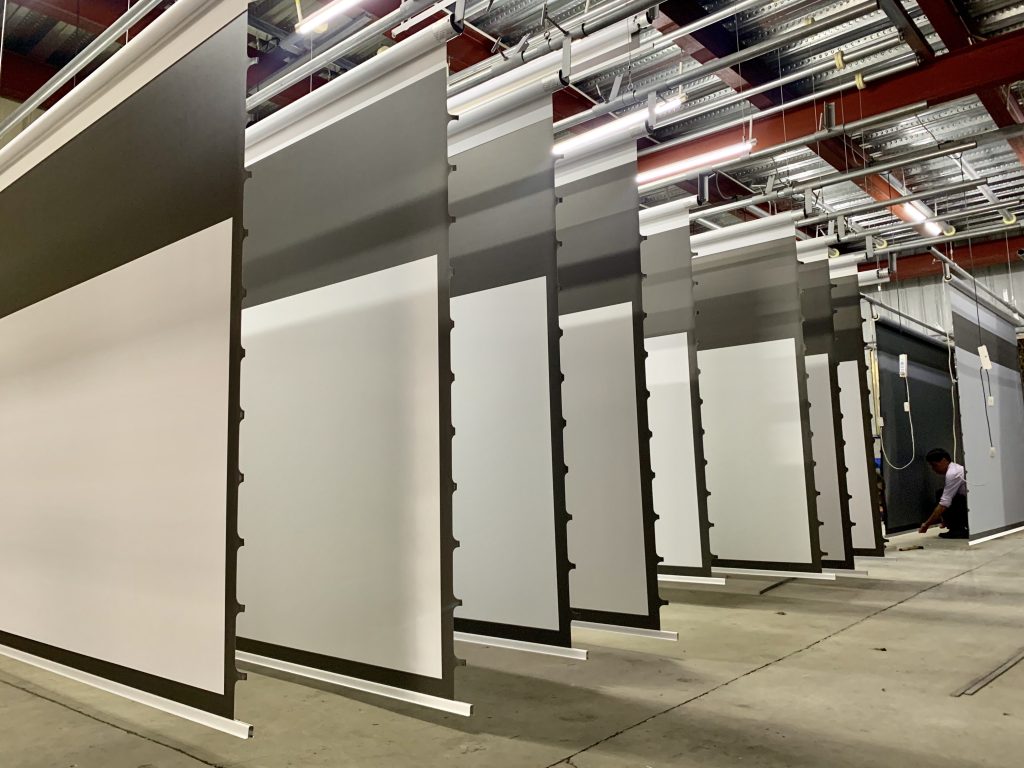
Fiberglass base material is specially designed to solve the pain point of PVC’s “dependence on tension”. A layer of 200D high-density fiberglass mesh is sandwiched between two layers of PVC film, like adding a steel frame to the screen, making the fiberglass projection screen completely unaffected by temperature changes. The flatness error is still far lower than the industry standard after alternating high and low temperatures.
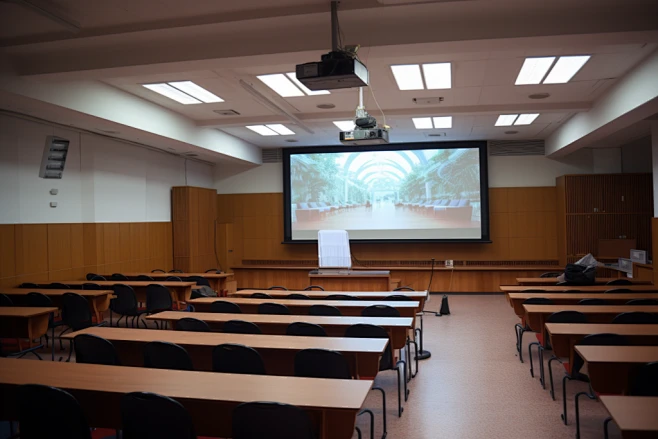
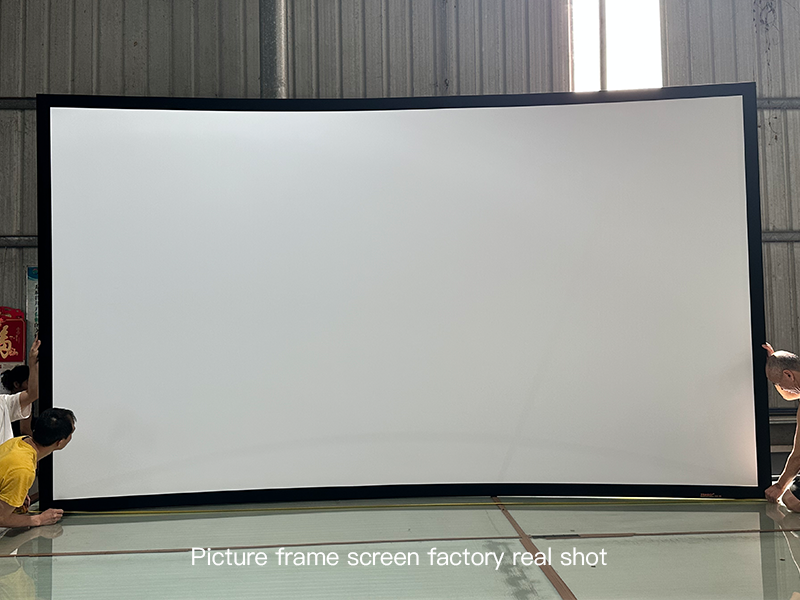
The characteristic of maintaining flatness by its own weight makes it the first choice for school projection screens and conference room motorized projection screens. It does not require additional maintenance even with frequent lifting and lowering every day, saving the trouble of tension installation and later maintenance. However, the ductility of fiberglass is only half that of PVC; forced bending will cause the fiberglass mesh to break, making it unsuitable for custom curved projection screens. Its surface texture is also slightly obvious, and the delicacy under 8K equipment is slightly inferior to PET.
PET: The Precision King, an Exclusive Base Material for high-end ambient light rejecting projection screens
PET is a high-end base material in Projection Screens. Its molecular density is 1.5 times that of PVC, and its high hardness allows it to carry complex nano-optical coatings, which is the core reason why ambient light rejecting projection screens must use PET. Food-grade PET resin processed by biaxial stretching technology has a thickness error of ±0.01mm per meter, and the light reflectance error is ≤1%, avoiding the problem of “bright in the middle and dark at the edges” in the image.
In an 8-year aging test, the brightness retention rate of PET projection screens reached 95%, and its yellowing resistance is far better than PVC and fiberglass, making it the optimal solution for home 8K projection screens and professional cinema projection screens. Of course, the cost of PET is higher, with a per square meter price 2-3 times that of PVC, and it also requires professional installation, making it more suitable for scenarios with extreme requirements for image quality.
Core Parameter Comparison of Three Base Materials (2026 Factory Test Data)
| Base Material | Indoor Service Life | Maximum Elongation | Cost per ㎡ (USD) | Image Sharpness | Environmental Grade | Core Application Scenarios |
|---|---|---|---|---|---|---|
| PVC projection screen base material | 5-7 Years | ≥30% | 15-30 | High (4K Compatible) | RoHS/REACH Compliant | Home tab-tensioned projection screens, small and medium conference room screens |
| Fiberglass projection screen base material | 7-10 Years | ≤15% | 20-40 | Good (4K Compatible) | RoHS/REACH Compliant | Commercial motorized projection screens, large size projection screens, school screens |
| PET projection screen base material | 10-15 Years | ≤5% | 45-80 | Top (8K Compatible) | Food-grade Environmental Standard | High-end ambient light rejecting projection screens, home 8K projection screens, professional cinema screens |
Factory Base Material Quality Inspection: 3 Strict Tests to Guard Quality
Every batch of projection screen base material must pass 3 elimination tests and be scrapped directly if it fails to meet the standards:
- Tear resistance test: 1kg steel ball drop impact from 1.5 meters, qualified only if there are no cracks or fiber shedding on the surface;
- Flame retardant test: Reach UL94 V-0 certification, self-extinguish within 10 seconds of open flame combustion and no dripping;
- Optical consistency test: Detect reflectance with a spectrometer, error ≤1% to avoid “uneven brightness” in the image.
Frequently Asked Questions for Buyers
Q1: Which projection screen base material to choose for a living room with direct sunlight?
A: Priority is given to the high-end ambient light rejecting projection screen with PET projection screen base material, which can filter more than 80% of ambient light; if the budget is limited, you can choose a PVC tab-tensioned screen with anti-light coating, but its yellowing resistance is not as good as PET under long-term sun exposure.
Q2: Why is fiberglass base material recommended for custom large size projection screens over 200 inches?
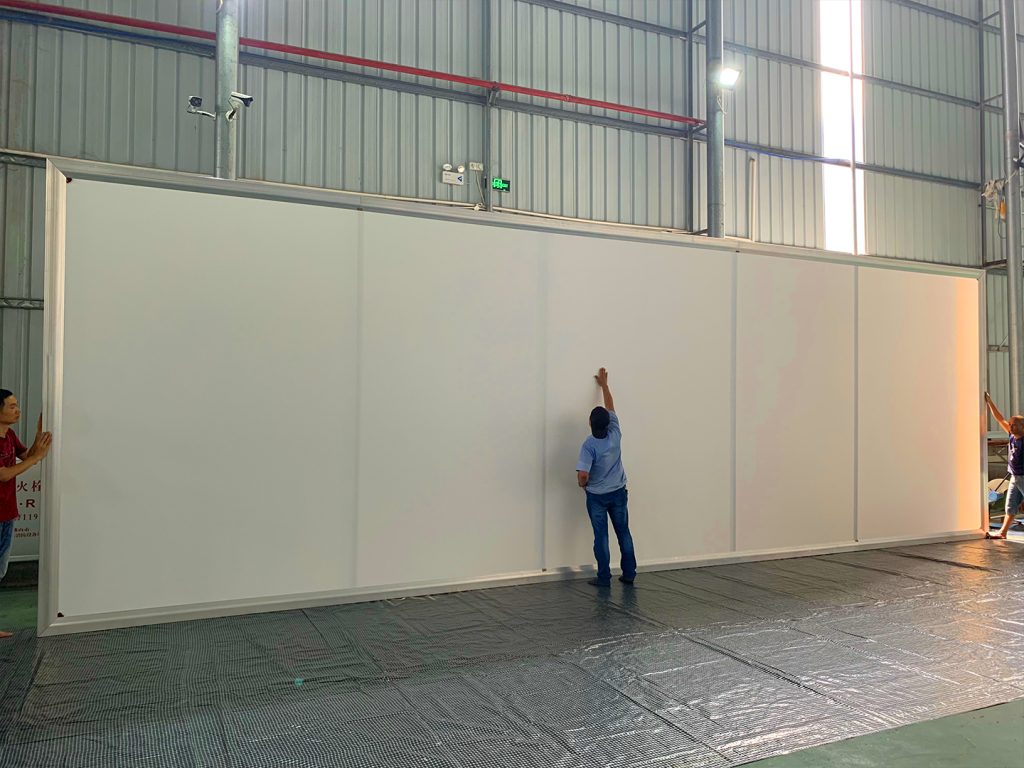
A: The core demand for extra-large size screens is flatness. Fiberglass base material is resistant to temperature changes and can be flat by its own weight without a complex tension system; PVC has high difficulty in tension control and is prone to ripples, while PET is prone to obvious seams in large-area splicing and has high transportation costs.
Q3: Which base material is more durable in humid environments (humid season/basement)?
A: Choose mildew-proof PVC projection screen base material, which is added with double mildew inhibitors to resist more than 80% humidity; the edge of fiberglass is prone to oxidation if not sealed properly, and PET is prone to bulging when the humidity exceeds 75%, both of which are not suitable for high-humidity environments.
Q4: Is PET base material a must for home 8K projection screens?
A: It is not a must but the optimal solution. 8K has extremely high requirements for the optical consistency of the base material—PET has a reflectance error of ≤1%, while PVC has an error of about 3%, which will slightly affect the presentation of details; if the budget is limited, you can choose a high-end PVC tab-tensioned screen, and you need to accept the compromise of slightly weaker dark details.
The core of choosing a projection screen base material is never to choose the most expensive one, but the most suitable one. For home use pursuing cost performance and 4K image quality, a PVC tab-tensioned projection screen is sufficient; for commercial use requiring stability, durability and easy installation, a fiberglass motorized projection screen is the first choice; for pursuing extreme 8K image quality or anti-light needs, a PET high-end projection screen is the way to go. ZSM specializes in custom projection screen production, and can customize projection screens with exclusive base materials for you according to the usage scenario, projection equipment and budget, allowing the screen to continuously and stably present clear and realistic visual effects in long-term use.
 Scan QR Code
ZSMSCR Facebook
ZSMSCR Instagram
ZSMSCR X
ZSMSCR YouTube
ZSMSCR TikTok