Welcome to Zsm Audiovisual Equipment(guangzhou)co.,ltd.

news
-
How to Choose a Projection Screen? No Mistakes After Reading This
Nowadays, people are paying more and more attention to visual experiences—and projection screens have become a must-have, whether you’re setting up a home theater or equipping a corporate meeting room. But with so many options on the market, it’s easy to feel overwhelmed when picking one. Let’s break this down step by step to help you find the perfect fit for your needs. White Screen or Gray Screen? It Depends on Your Space Imagine you’re putting together your dream home theater: you’ve got the latest projector, a cozy couch, and even a bowl of popcorn ready—then you hit a snag: should you go for a white screen or a gray one? White screens are the classic choice, and their biggest strength is accurate, vibrant colors. If you use a DLP projector (these are known for strong ...Learn more -
Easy and Effective Tips to Clean and Maintain Your Projection Screen
In the dynamic world of visual presentations and home entertainment, projectors have become a game-changer. Their versatility is astonishing, enabling us to project images onto an array of surfaces, from ordinary walls and desks to the mesmerizing canvas of water screens and even rugged rocks. However, to truly unlock the potential of a projector and enjoy a breathtaking viewing experience, the synergy between ahigh-quality projector and a well-maintained projection screen is indispensable. For the vast majority of users, pairing a projector with a specialized screen is the go-to choice. But what transpires when that crucial screen succumbs to dirt, warping, or discoloration? The consequences are clear: a significant decline in image quality. The silver lining? With a collection of...Learn more -
How to Master Projection Screen Setup for DLP Blending: A Step-by-Step Configuration Handbook
When creating seamless large-scale visual displays,DLP projection screen blending technology stands out. Let’s start with the basics: DLP (Digital Light Processing) works by digitally processing images before projection. Here’s the workflow: Light from a UHP lamp passes through a condenser lens and light pipe for homogenization, then goes through a color wheel (separating into RGB or RGBW), hits a DMD (Digital Micromirror Device) chip, and reflects through the lens onto the screen. DLP is renowned for its reliability, portability, bright output, and stunning image quality. Edge blending takes this further by merging multiple projectors into one continuous, high-resolution image without visible seams. While projectors and software do the heavy lifting, the projection scre...Learn more -
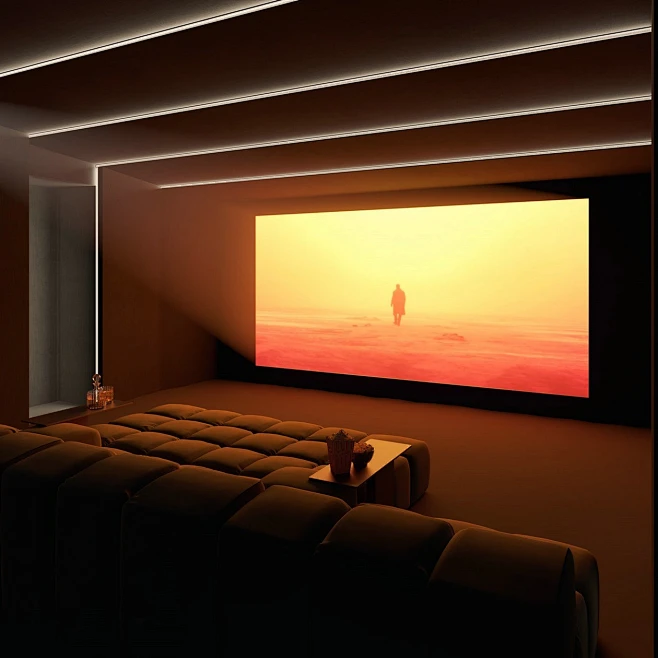
The Art of Choosing the Right Projection Screen: A Clear and Practical Guide
Picking the perfect projection screen involves more than just size—it shapes how you see and experience everything from weekend movies to Monday morning presentations. Let’s walk through the essentials without the technical overload. Gain: Brightness vs. Viewing AngleGain tells you how efficiently a screen reflects light. A gain of 1.0 is like a standard whiteboard—it diffuses light evenly. Go higher, say 2.0, and the screen acts more like a mirror, intensifying brightness for those right in front. But there’s a trade: the higher the gain, the narrower the ideal viewing angle. Sit off to the side, and the image may look faded. Quick example: A high-gain screen in a wide meeting room? Not ideal. The person running the presentation sees a brilliant image, but folks on the s...Learn more -
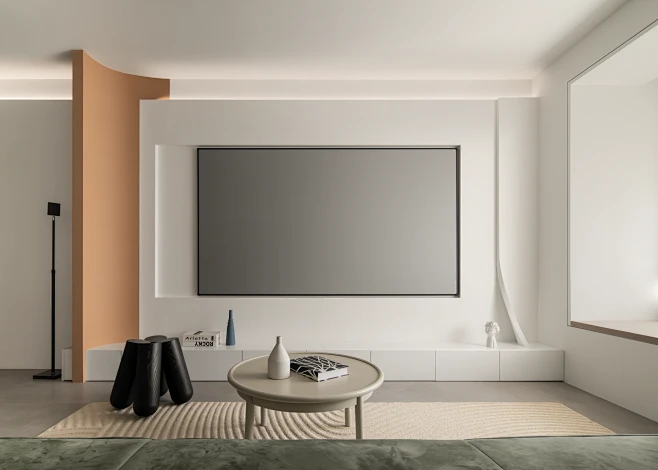
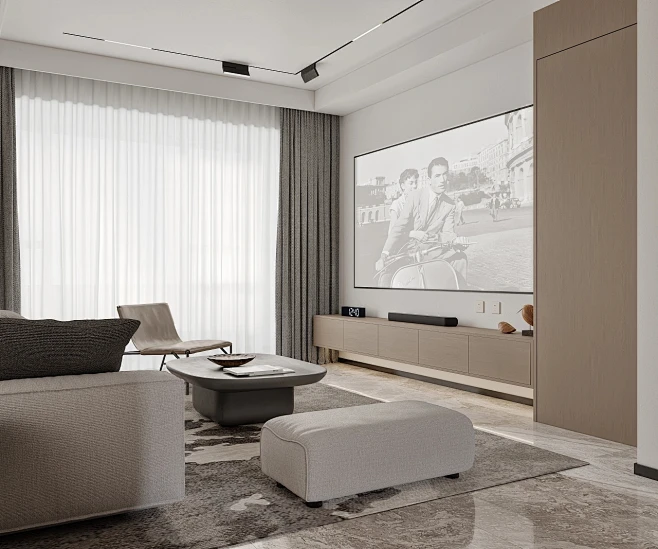
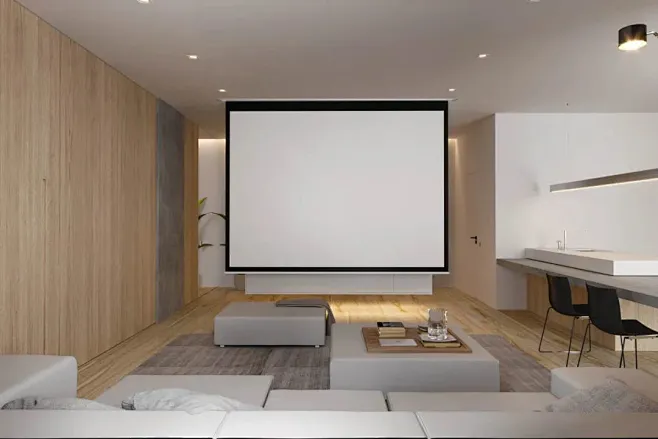
6 Creative Ways to Use Projector Screens Instead of TVs – Which One Fits Your Home?
In modern home design, the combination of a projector and screen has become a popular alternative to traditional TVs. This setup not only replaces the television but also introduces a new layer of elegance and functionality to your living space. Whether you’re aiming for a minimalist look, saving space, or creating a home theater experience, projector screens offer flexibility and style that conventional TVs often can’t match. Let’s explore six innovative installation methods that might inspire your next home upgrade! 1. Open-Plan Living and Dining Areas Many homes today feature open layouts where the living and dining areas flow into one another. In such spaces, especially smaller ones, placing a sofa or TV cabinet in the middle can make the area feel cramped. Instead...Learn more -
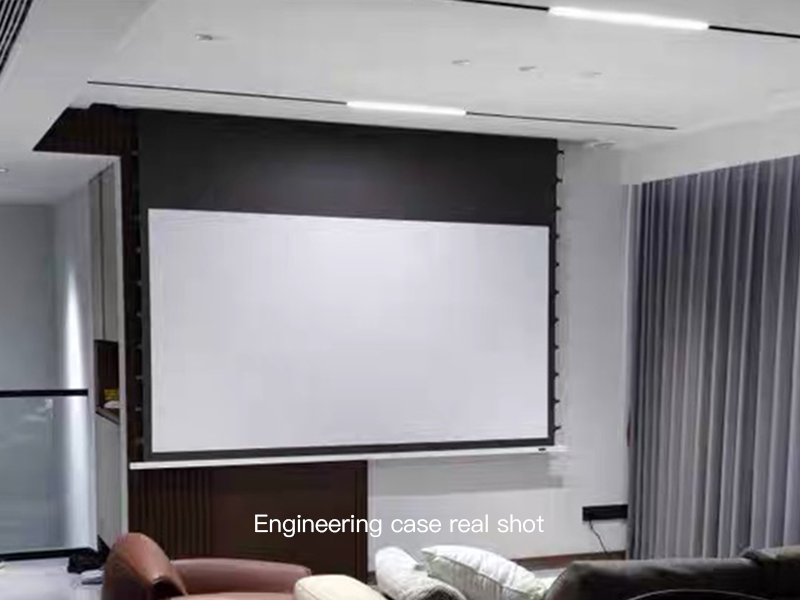
Projection Screens: Critical Facts to Master Before Custom Ordering
Choosing the right projection screen might seem technical, but it’s a bit like choosing a canvas for a masterpiece. You wouldn’t hang a small, blurry canvas for a detailed oil painting, right? Similarly, the right screen transforms your viewing experience. Let’s dive into some essential—and fun—knowledge about projection screens! What’s the Ideal Screen Size?First things first: size does matter. But it’s not just about going big—it’s about going right. To pick the perfect size, measure the width and height of the spot where you plan to install the screen. Think of it like fitting a piece of art into a specific frame. Most product pages include a sizing chart, so use that as your guide. Remember, a screen that’s too large can overwhelm the room, while one that’s too small m...Learn more -
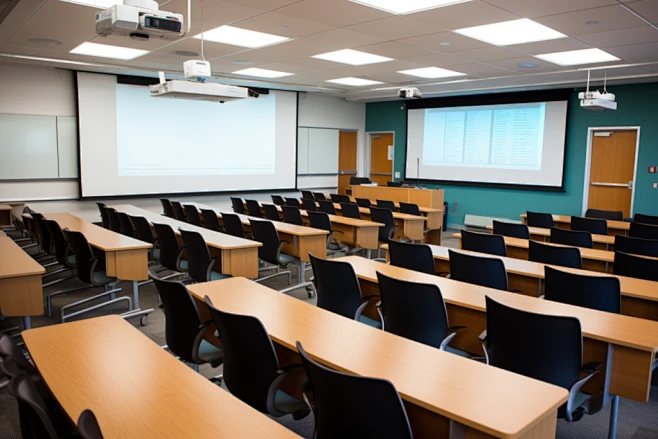
Configuration of Computer-Controlled Electric Screens in Multimedia Classrooms
Based on practical teaching applications, the setup comprising a computer, projector, and electric screen has been widely used in multimedia classrooms for many years. While this configuration offers the advantage of relatively low initial investment, it comes with the significant drawback of high ongoing maintenance costs, particularly due to the expensive replacement of projector bulbs. Currently, the average lifespan of a projector lamp is around 2,000 hours, which generally meets the teaching demands for the first year. However, from the second year onward, bulbs need to be replaced periodically. Each replacement incurs considerable costs, typically amounting to one bulb per year. By the third year, replacements become more frequent, often requiring two changes annually. As t...Learn more -
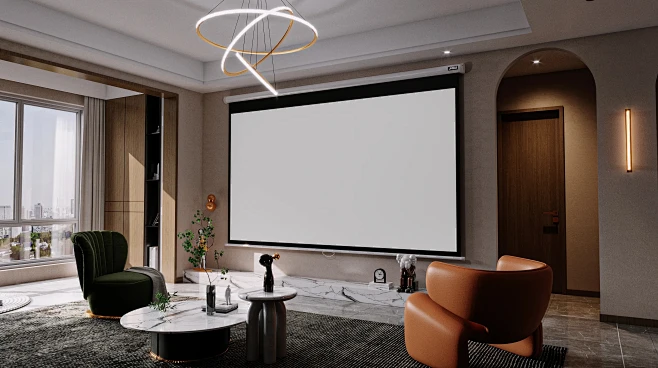
Projection Screens: Key Criteria for Choosing the Right Fit for Your Business
Screen GainGain is a numerical value that represents the inherent reflective properties of screen material (i.e., its brightness from various angles). When a specific amount of light is projected onto a perfectly diffuse reflective surface (where reflectivity is uniform across all 180-degree angles), the reflected brightness is set as a baseline value of 1. Under the same conditions, when light is projected perpendicularly onto the screen, the brightness at the center and other points along the same arc is measured. The ratio of this brightness to that of the completely diffuse surface is referred to as the screen gain. Half-gain is a critical metric for evaluating screen brightness. It refers to the gain value when the viewer moves away from the central axis of the screen to ...Learn more -
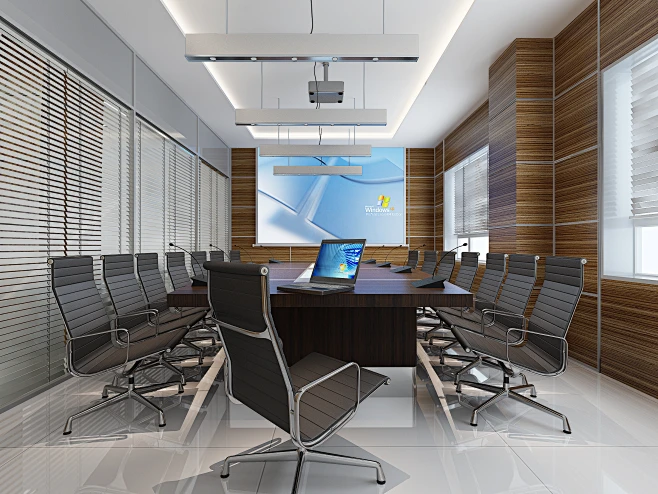
What are the Notable Features of Engineering Projectors?
In large-scale settings such as conference rooms, product launches, opera houses, museums, stadiums, auditoriums, multimedia exhibition halls, and science and technology culture galleries, attentive audiences may notice the use of bulky engineering projectors. These devices differ significantly from standard business, educational, home, or portable projectors in several aspects. Firstly, they come with a higher price tag. Secondly, they are generally larger in size and heavier than conventional projectors. Moreover, they incorporate advanced technology, delivering more powerful performance. Lastly, they are capable of producing larger projections with superior color accuracy, sharper image quality, and stunning 3D and 4K visual effects, resulting in outstanding picture perfor...Learn more -
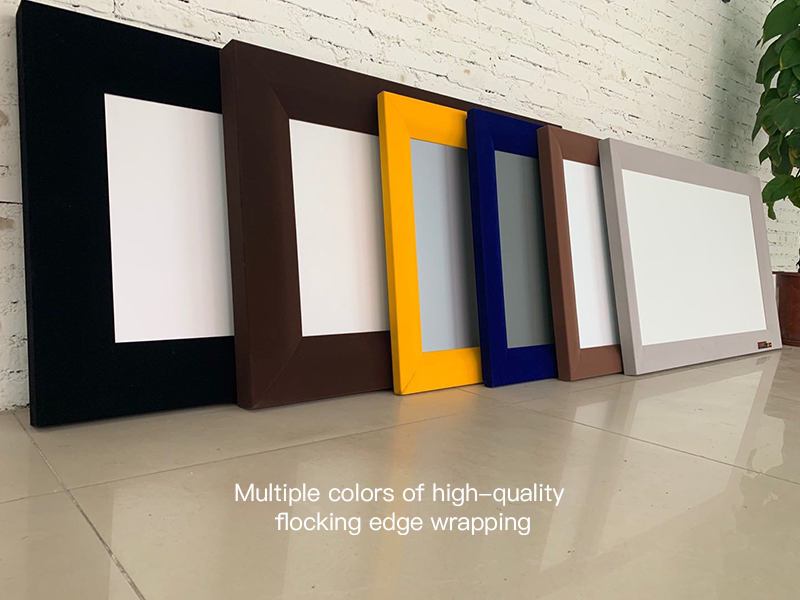
White Matte Projection Screens: A Comprehensive Review of Their Advantages
From the perspective of physical properties, white matte projection screens are among the most versatile and uniformly reflective materials available. They offer an unrestricted viewing angle and exceptional image consistency, while delivering precise clarity and outstanding color reproduction—particularly for black, white, and a wide spectrum of other colors. Under consistent ambient lighting conditions, white matte screens demonstrate highly even reflective characteristics, making them particularly suitable for front projection applications. The surface of these screens is washable,moisture-resistant, mold-proof,flame-retardant, and free of unpleasant odors. Additionally, they offer high gain and awide viewing angle. These screens are compatible with a variety of products...Learn more