
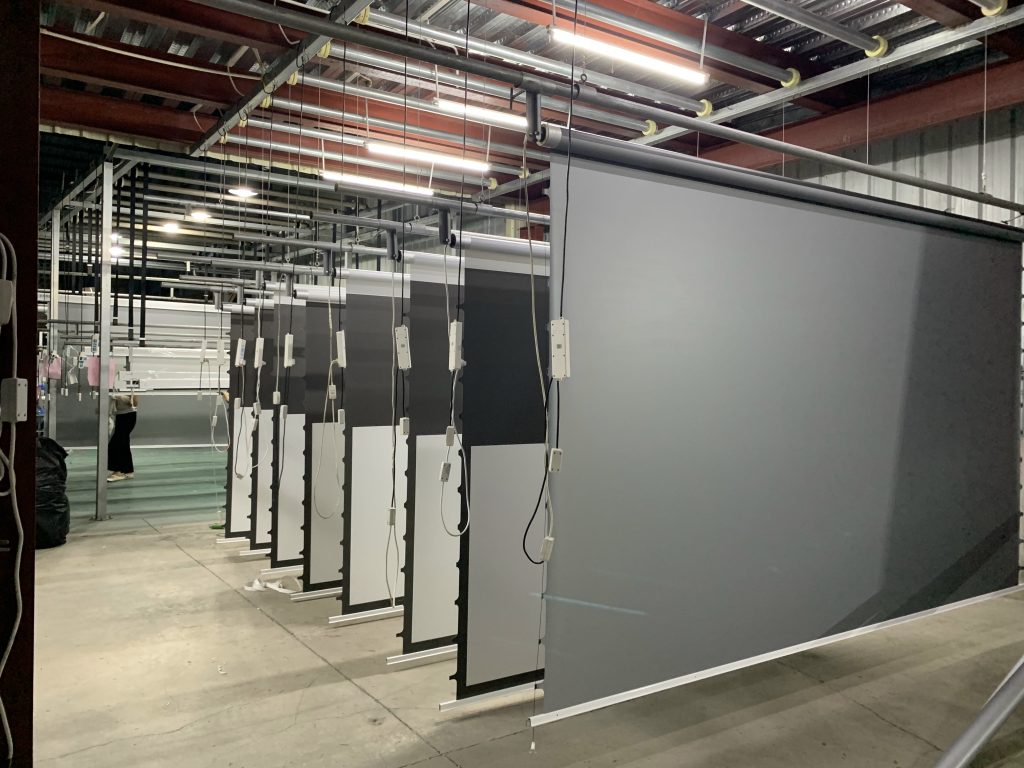
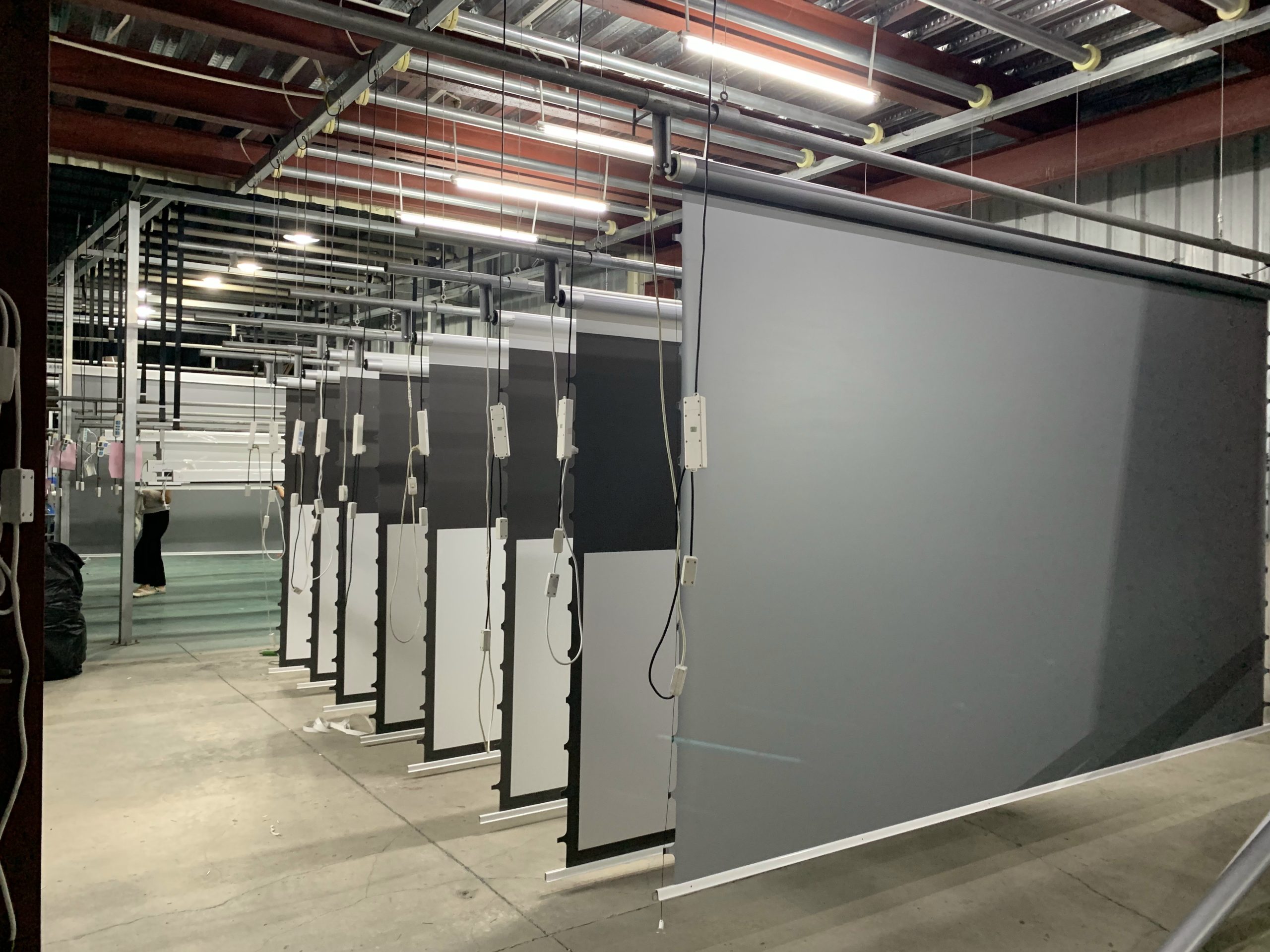
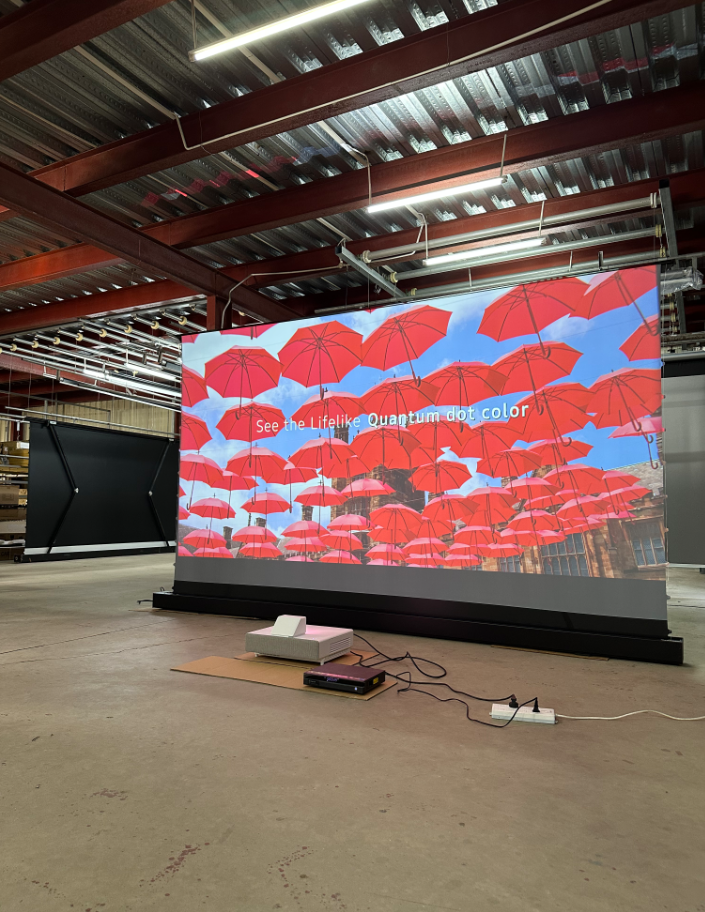
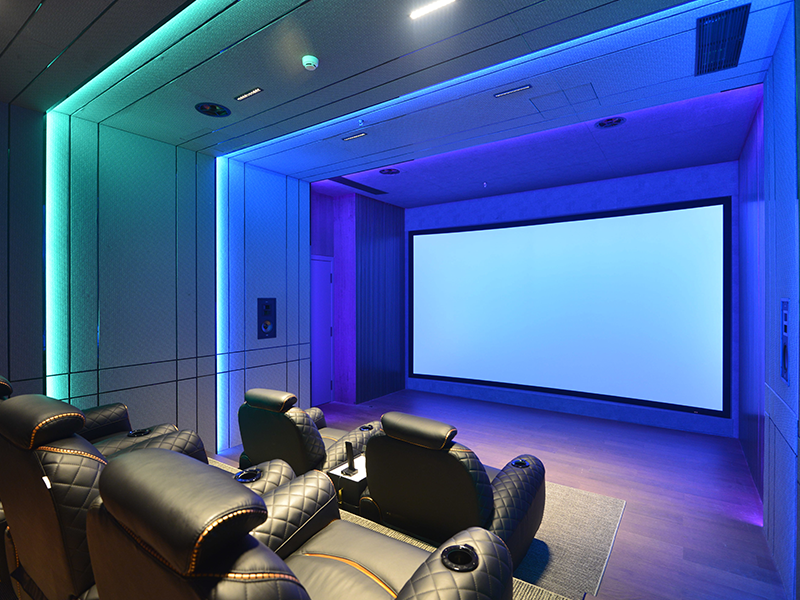
When it comes to home theaters and commercial displays, the final image quality hinges not just on the projector. The projection screen is a critical optical component. A high-quality screen can dramatically enhance image brightness, contrast, and color accuracy. Today, leading projection screen manufacturers are innovating deeply from two perspectives: material science and interactive intelligence.
I. More Than “Just a Surface”: The Optics Behind the Material
The common misconception is that a screen is a passive display medium. The R&D of modern high-end screens has entered the nano-level.
- Micro-structured Optical Layers: Some manufacturers use optical screens with surfaces made of precise micro-prisms. These structures direct the projector’s light back to the viewing area while absorbing ambient light, creating an ambient light rejecting effect.
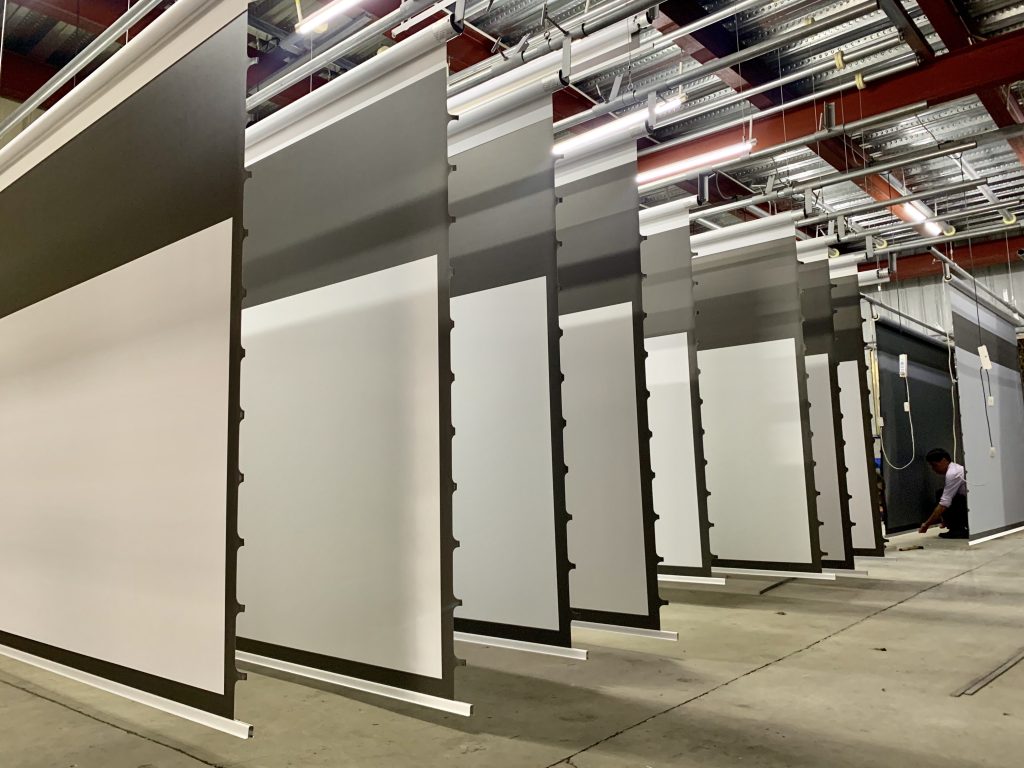
- High-Contrast Base Layers: The latest grey or dark base materials effectively absorb light that penetrates the top layer, preventing secondary reflection. This results in deeper blacks and can improve contrast ratio by over 300%.
It’s akin to using a directional microphone (the optical screen) in a noisy conference room (ambient light) to pick up only the sound source you want (the projector light), resulting in clear audio (the image).
II. Interactivity as the New Standard
Traditional screens are “read-only,” but that is changing. Forward-thinking projection screen manufacturers are turning the screen into a large interactive interface.
- Integrated Touch Functionality: By embedding micro-sensors along the screen’s edges, precise touch capabilities can be achieved, transforming it into a giant interactive whiteboard or design platform.
- Auto-Adaptation: Built-in ambient light sensors can detect changes in the room’s lighting and suggest or automatically adjust projector settings to maintain optimal picture quality.
III. Data Insights into the Customization Market
Our analysis of recent market trends reveals interesting patterns:
| Demand Feature | Approx. Share | Core Technology | Value Proposition |
|---|---|---|---|
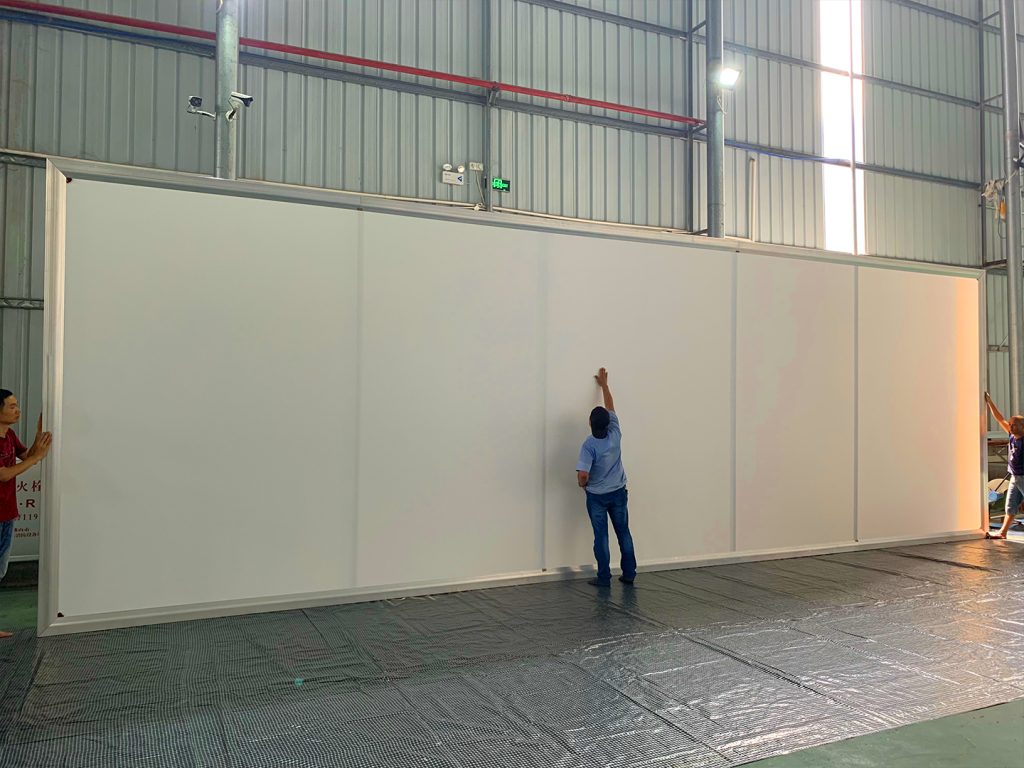
| Extra-Large Size (120″+) | ~35% | Seamless splicing, flatness control | Immersive cinema experience |
| High Ambient Light Rejection | ~40% | Optical microstructure, dark base | Daytime usability in living rooms |
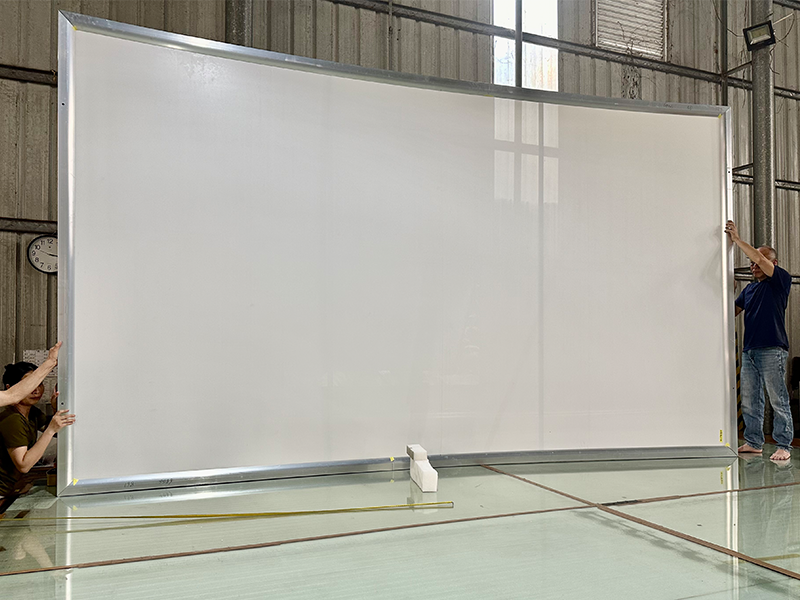
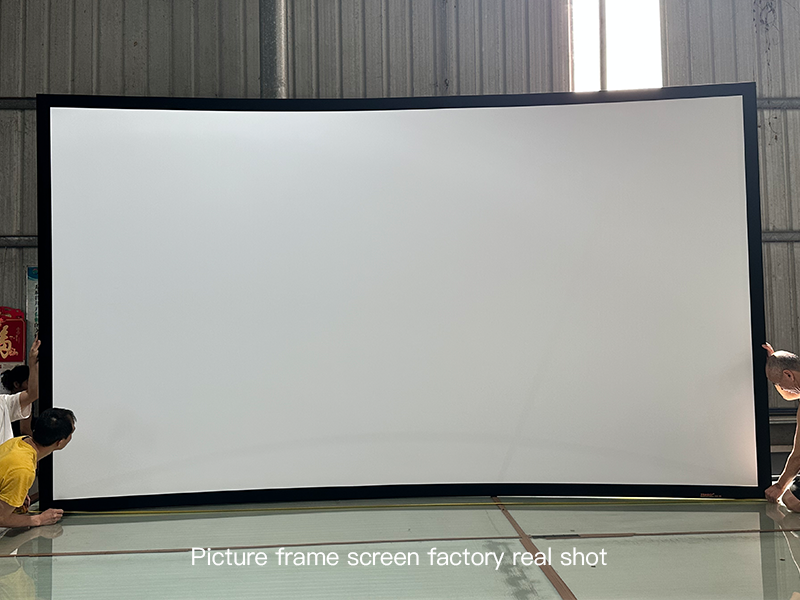
| Custom Flexible/Curved | ~15% | Special coatings & tension systems | Fits unique architectural spaces |
| Integrated Interactive Features | ~10% | Sensor fusion technology | Commercial & educational applications |
IV. Quick Q&A for Users
- Q: My wall is very white and flat. Do I still need a professional screen?
A: Highly recommended. A white wall cannot control light scattering effectively, leading to significant losses in contrast and color saturation. The core value of a professional projection screen lies in its optical gain and ambient light rejection capabilities, which a wall cannot match. - Q: How do I choose the right screen for my living room with windows?
A: For complex lighting environments like this, prioritize ambient light rejecting (ALR) screens. Pay close attention to parameters like “half-gain angle” and ambient light rejection rate, as they quantitatively reflect the screen’s performance.
The future of projection screen manufacturing lies not just in supplying materials, but in building integrated visual solutions. The screen will act as an intelligent terminal, deeply integrated with projection devices and the spatial environment to create seamless immersion.
 Scan QR Code
ZSMSCR Facebook
ZSMSCR Instagram
ZSMSCR X
ZSMSCR YouTube
ZSMSCR TikTok