
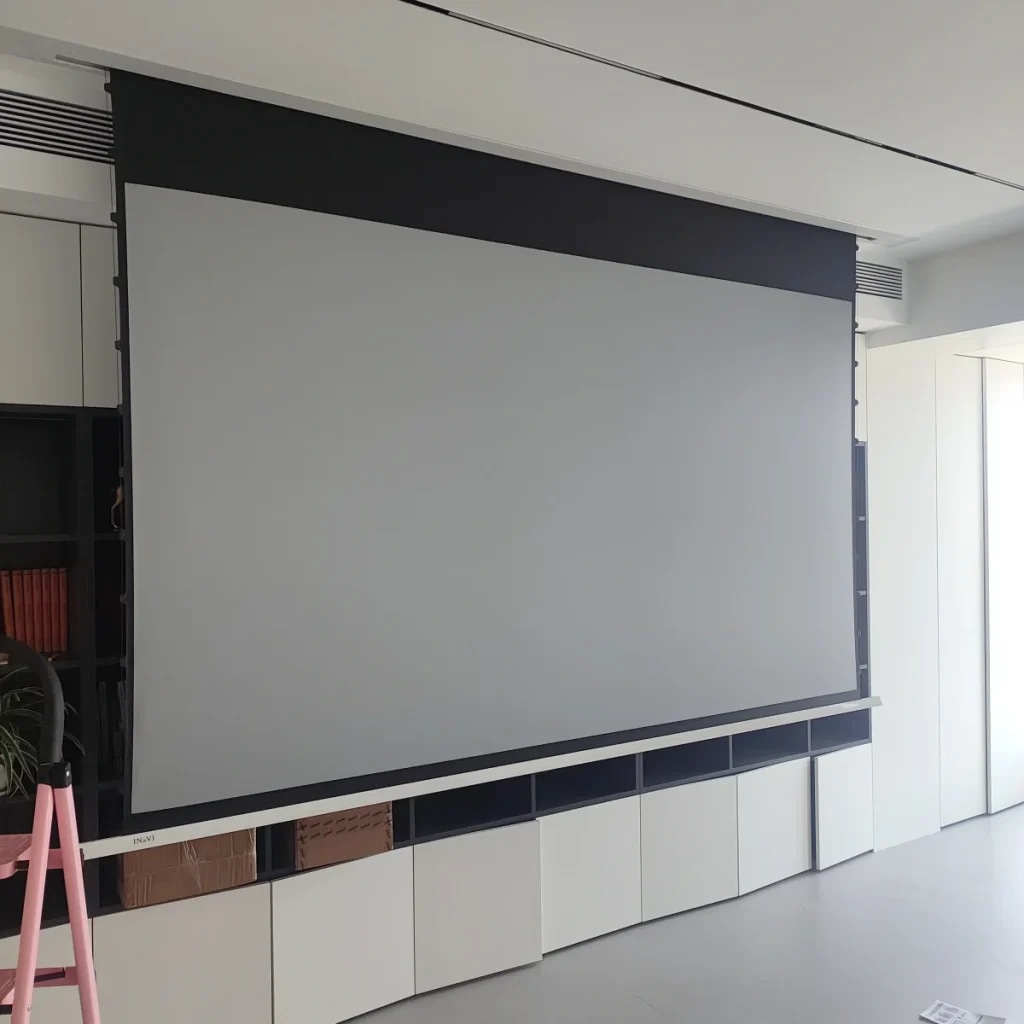
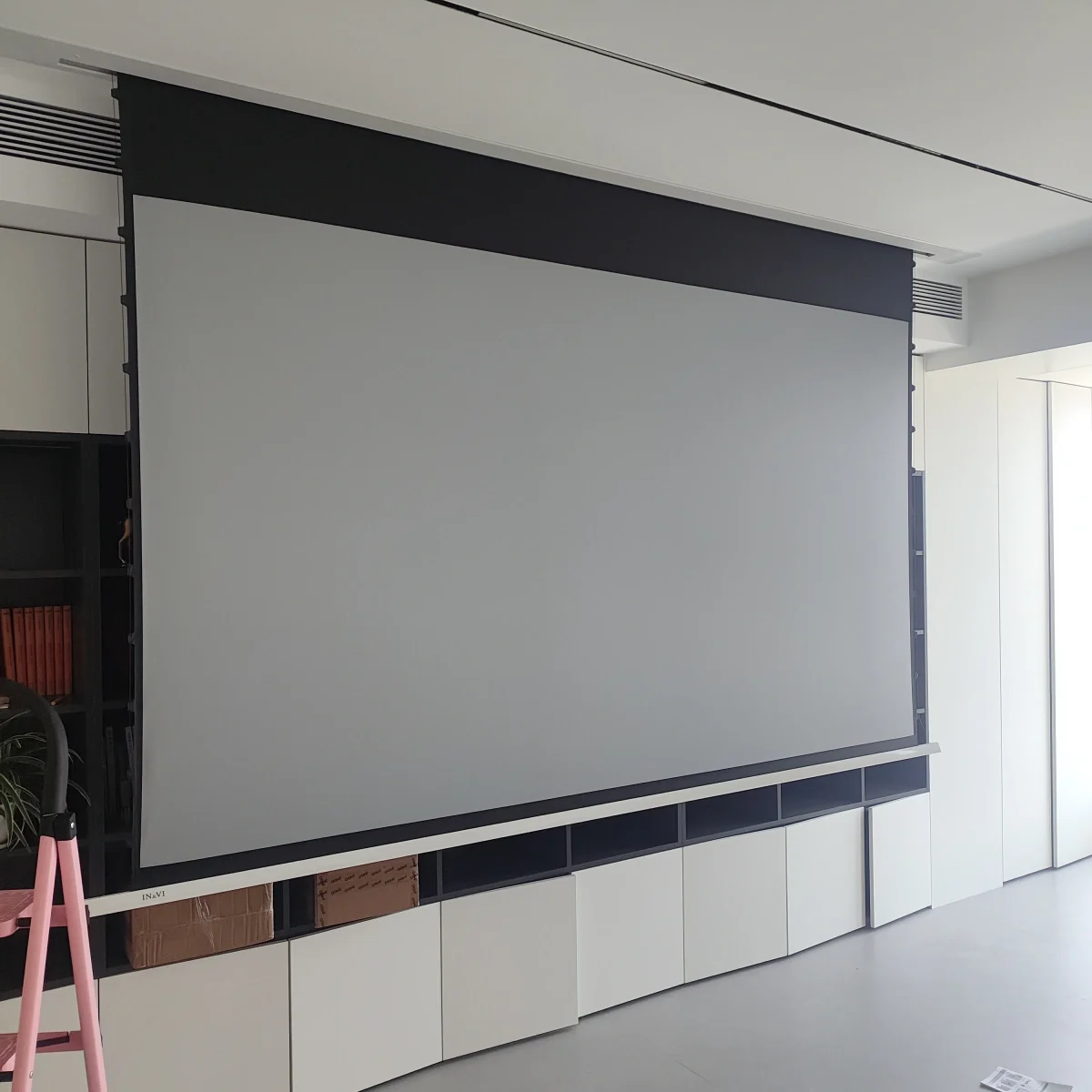
To solve the strong light interference during daytime viewing in the living room—especially for overseas families with large floor-to-ceiling windows—many choose Fresnel Anti-Light Screen. However, they often find the Viewing Angle of Fresnel Anti-Light Screen has natural limitations, such as gray pictures when sitting sideways and dim corners on large-size models. These are common feedback from overseas users. Starting from optical principles, measured data and real scenarios, we discuss the physical characteristics of Fresnel Anti-Light Screen and practical solutions suitable for living rooms, combined with ZSM-Screen’s overseas customization experience.
Optical Principle of Fresnel Anti-Light Screen: Directional Reflection Logic of Lens and Root Cause of Viewing Angle Limitations
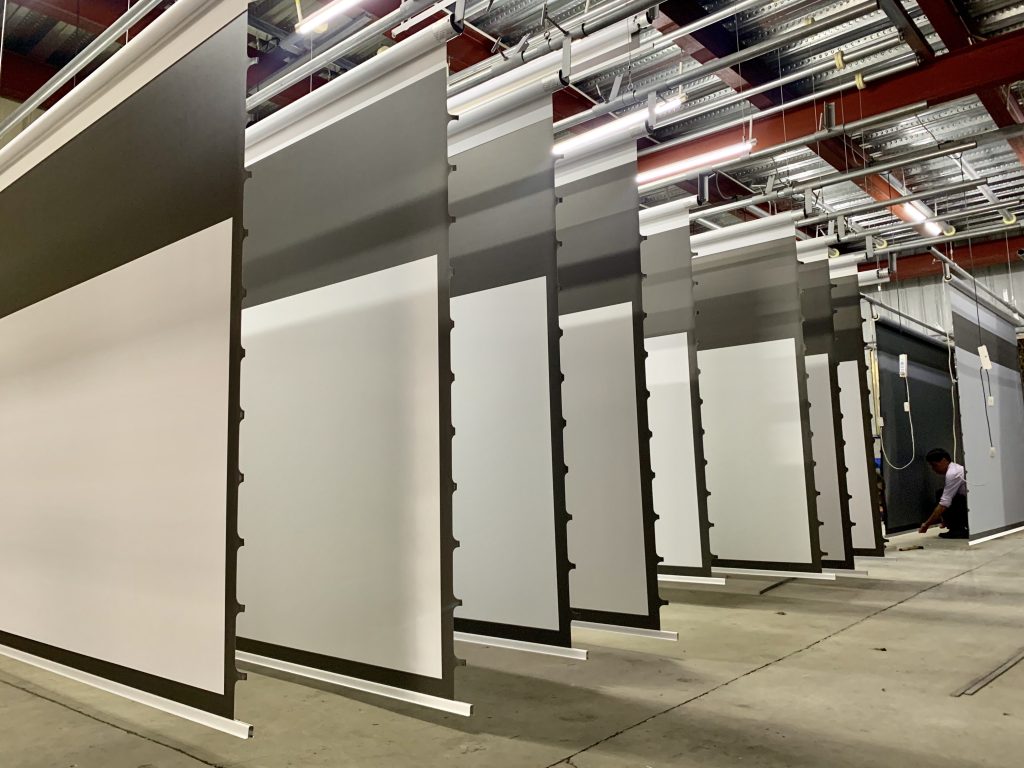
The core competitiveness of Fresnel Anti-Light Screen comes from a layer of 0.1-0.3mm fine concentric semicircular microstructures on the screen surface, a simplified form of Fresnel lens. Made of high-transparency PET material, these wear-resistant microstructures focus light and reflect it directionally, while reducing the screen thickness, making it suitable for hanging installation in various overseas living rooms, even small apartments.
These microstructures (almost invisible to the naked eye) act as small reflectors, accurately reflecting projector light to the 30° central viewing area and blocking ambient light from ceilings and windows. This makes the Daytime Viewing Effect of Fresnel Anti-Light Screen far better than ordinary white screens, popular among overseas users who dislike heavy blackout curtains.
This directional design, however, causes viewing angle limitations. Once the viewing position deviates beyond 30°, light reflection efficiency drops sharply—not a quality issue, but a physical characteristic. It’s like a flashlight: focused light is bright but narrow, scattered light is wide but dim. Fresnel Anti-Light Screen sacrifices some viewing angle for anti-light performance, a necessary trade-off.
Authoritative Data: Detailed Measured Values of Gain and Half-Gain Viewing Angle of Fresnel Anti-Light Screen
According to ISO/IEC 21118:2026, screen gain (light reflection efficiency) is inversely related to viewing angle. We measured 3 mainstream Home Fresnel Anti-Light Screens (80/100/120-inch) under standard conditions (500lux ambient light, 3200 lumens projector), sorting out the following brightness attenuation table:
| Screen Size | Viewing Angle Deviated from Center | Screen Gain Value | Picture Brightness Status | Half-Gain Judgment | Intuitive Visual Experience |
|---|---|---|---|---|---|
| 80-inch | 0° (Center) | 1.1-1.2 | Standard brightness, full color | Best Viewing Angle | Clear picture, distinct details, no color shift |
| 80-inch | 30° | 0.65-0.7 | Slight attenuation, basically normal color | Half-Gain Critical Point | Slight decrease in brightness, perceptible to the naked eye but not affecting viewing |
| 80-inch | 45° | 0.35-0.4 | Obvious darkening, slight color shift | Viewing Angle Failure Area | Gray picture, blurred character outlines, decreased color saturation |
| 100-inch | 0° (Center) | 1.0-1.1 | Standard brightness, full color | Best Viewing Angle | Wide picture, clear details, outstanding anti-light effect |
| 100-inch | 30° | 0.6-0.65 | Slight attenuation, slight dark corners at the edges | Half-Gain Critical Point | Normal brightness in the center, slightly dark edges, no obvious color shift |
| 100-inch | 45° | 0.3-0.35 | Obvious darkening, serious color shift | Viewing Angle Failure Area | Overall gray picture, color distortion, obvious dark corners at the edges |
| 120-inch | 0° (Center) | 1.0-1.05 | Standard brightness, uniform color | Best Viewing Angle | Strong immersion of large picture, stable anti-light effect |
| 120-inch | 30° | 0.55-0.6 | Obvious attenuation, prominent dark corners at the edges | Half-Gain Critical Point | Significant decrease in brightness, dark corners at the edges affect the integrity of the picture |
| 120-inch | 45° | 0.25-0.3 | Severe darkening, serious color shift | Viewing Angle Failure Area | Blurred picture, serious color distortion, unable to watch normally |
The data shows Fresnel Anti-Light Screen’s high-quality viewing area is only within 30° of the center; larger sizes have more obvious limitations. Higher gain screens (e.g., 1.2) have narrower half-gain viewing angles (≈28°) than lower gain ones (1.0, ≈35°). Matte surface screens have better anti-glare but 2-3° narrower viewing angles.
Real Pain Points of Living Room Viewing: Those Neglected Detailed Troubles
Ordinary overseas living rooms (often open-plan with diverse sofa layouts) face three practical problems when using Fresnel Anti-Light Screen, common in user feedback:
Side viewing triggers Color Shift of Fresnel Anti-Light Screen, and the stronger the light, the more obvious the color shift. For example, when the window is open during the day in California, the strong sunlight will make the picture change from a normal warm tone to a cold gray when sitting on the side of the L-shaped sofa, the skin color of the characters will be distorted, and even the edges of the text will have blurred shadows—many users feedback that they can’t clearly see the subtitles of English movies at this time; when the main living room light is turned on in the evening, the color shift will be slightly relieved, but the brightness attenuation is still obvious, basically losing the normal viewing experience. Some European users even said that the side viewing effect is worse than that of ordinary white screens, which makes them regret choosing Fresnel Anti-Light Screen.
Side viewing triggers Color Shift of Fresnel Anti-Light Screen, with gray pictures and distorted colors, especially in strong light. Users often can’t clearly see English subtitles, making the side of L-shaped sofas almost unusable for viewing.
For Large Size Fresnel Anti-Light Screen (above 100-inch), 5-8cm radius dark corners appear at the four corners, more obvious in dark-toned movies, destroying picture immersion—annoying for sports fans.
ZSM-Screen Living Room Fresnel Anti-Light Screen Adaptation Solutions: Practical Compromises for Overseas Families
As an overseas custom projection screen brand , we offer three practical solutions to balance Fresnel Anti-Light Screen’s anti-light advantage and viewing angle limitations, with exclusive customization for different needs.
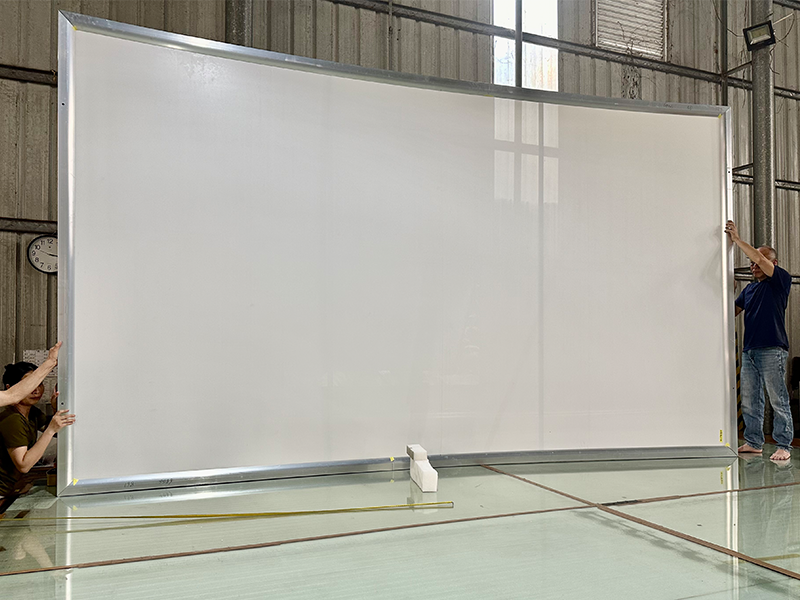
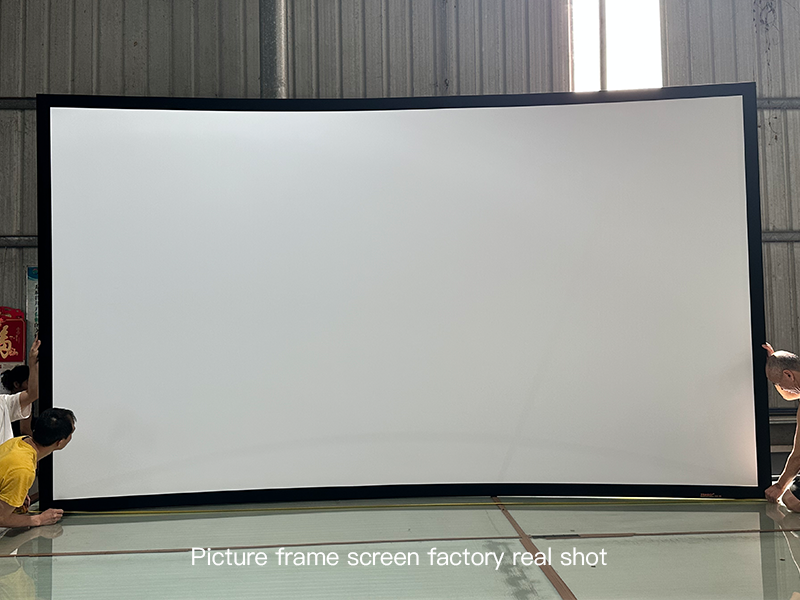
Families with L-shaped sofa layout: Customize micro-radian Fresnel Anti-Light Soft Screen. Through actual measurements, we found that designing the screen into a micro-curved surface with 0.5-1.2 radians (the specific radian is determined according to the length of the L-shaped sofa, usually 0.8 radians for sofas with a length of 3.5-4.5 meters) can expand the effective viewing angle by 5-8°, allowing the side position of the L-shaped sofa to also obtain a good viewing experience. This customized soft screen adopts flexible PET material, which can be rolled up for transportation, suitable for overseas renters or hardcover room users; at the same time, we will accurately adjust the radian according to the user’s sofa distance (usually 3-4 meters for 100-inch screens) and projection position, ensure the minimum difference in brightness and color between the central viewing angle and the side viewing angle, taking into account both the Daytime Viewing Effect of Fresnel Anti-Light Screen and multi-person viewing needs. Many European users who have used this customized solution feedback that the side viewing effect has been significantly improved.
L-shaped sofa families: Custom micro-radian Fresnel Anti-Light Soft Screen (0.5-1.2 radians) expands the effective viewing angle by 5-8°, suitable for renters. We adjust the radian based on sofa distance and projection position, ensuring consistent brightness and color.
Well-shaded living rooms: Match with lenticular screens for “dual-screen switching”. Lenticular screens have a 60°+ half-gain viewing angle, ideal for multi-person viewing. We provide a 10-second manual switching bracket, using Fresnel Anti-Light Screen during the day and lenticular at night.
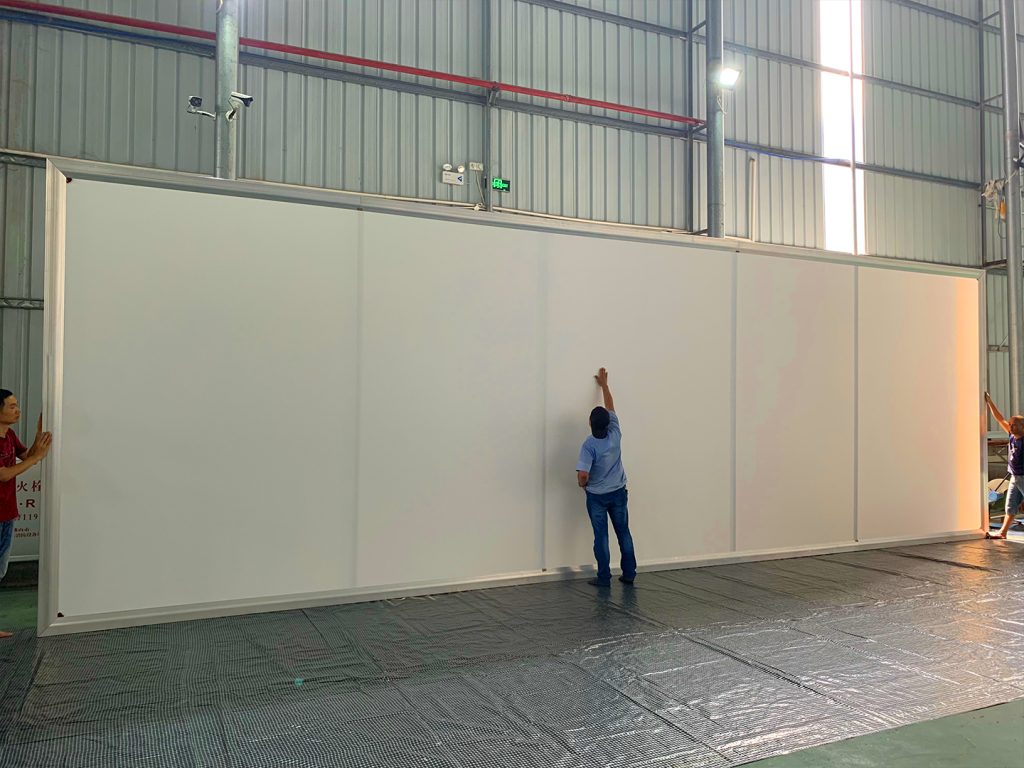
Large living rooms (viewing distance ≥4m): Custom seamless spliced Fresnel Anti-Light Screen (gap ≤0.1mm) reduces dark corners and expands the viewing angle by 3-5°, suitable for 120-inch+ needs, with on-site installation guidance overseas.
Large living rooms (viewing distance ≥ 4 meters): Customize spliced Fresnel Anti-Light Screen. For large-size needs above 120 inches, we adopt a seamless spliced design, with a splicing gap of ≤0.1mm, which does not affect the integrity of 4K projection pictures. By accurately calibrating the angle of microstructures (adjusting the tilt angle of edge microstructures to 18°), we can reduce edge dark corners and expand the effective viewing angle by 3-5° at the same time. This spliced screen is suitable for overseas users with large living rooms and open-plan living rooms, can be flexibly customized according to the living room size (up to 200 inches), and provides on-site installation guidance (supported in major cities in North America, Europe and Southeast Asia), solving the installation troubles of large-size screens for overseas users.
FAQ: Detailed Explanation of High-Frequency Questions from Overseas Users
In the process of docking with overseas users, we found that many users have questions about the use of Fresnel Anti-Light Screen, especially questions related to viewing angle. Here, we sort out the 6 most frequent questions and answer them in detail combined with actual measurement experience to help everyone avoid using misunderstandings:
Q: Can Fresnel Anti-Light Screen be installed upside down? A: Absolutely not recommended. The microstructures of Fresnel Anti-Light Screen are designed according to the light reflection path of the projector (usually placed below the screen). Upside-down installation will completely destroy the directional reflective structure, the anti-light effect will be directly invalid, the picture brightness will drop by more than 50%, and serious color shift and blurriness will occur—some users even feedback that the picture becomes completely unrecognizable after upside-down installation. If it is accidentally installed upside down, it needs to be adjusted in time, otherwise the screen microstructures may be damaged after long-term use, which will shorten the service life of the screen by 30%.
Q: Can Fresnel Anti-Light Screen be installed upside down? A: No. Upside-down installation destroys the reflective structure, reducing brightness by over 50% and causing color shift, even damaging microstructures long-term.
Q: Can it be used with laser TVs? A: Yes, but viewing angle limitations are slightly obvious. Choose Fresnel Anti-Light Screen with 1.0 gain, and we offer customization compatible with mainstream laser TV models.
Q: Can Fresnel Anti-Light Screen be used with laser TVs? Will the viewing angle limitation be more obvious? A: It can be used with laser TVs, but the viewing angle limitation will be slightly more obvious. The projection method of laser TVs is different from that of ordinary projectors, and the light projection angle is gentler (usually 15-20°), so when matched with Fresnel Anti-Light Screen, the best viewing area will be further narrowed (about 25-30°). We suggest laser TV users choose Fresnel Anti-Light Screen with a gain of about 1.0, which is more suitable for the brightness output of laser TVs (usually 2000-3000 lumens), and adjust the projection angle of the laser TV to expand the effective viewing angle as much as possible. ZSM-Screen can provide exclusive Fresnel Anti-Light Screen Customization service for laser TVs, compatible with mainstream laser TV models such as Sony, Samsung and LG.
Q: Can sizes be customized for overseas users? A: Yes. We customize size (60-200-inch), gain (0.8-1.2) and radian, with shockproof packaging, door-to-door delivery and English installation guidance.
ZSM-Screen has overseas warehouses (North America, Europe, Southeast Asia) for 3-7 day delivery and 1-year after-sales service. We tailor Fresnel Anti-Light Screen Customization solutions for different overseas living rooms, solving viewing angle troubles while retaining anti-light performance.
In fact, the viewing angle limitation of Fresnel Anti-Light Screen is not a “flaw”, but a “trade-off” in optical design——sacrificing part of the viewing angle is inevitable to achieve clear viewing in strong light. For overseas families who want both the Daytime Viewing Effect of Fresnel Anti-Light Screen and care about the whole family’s viewing experience, finding an adaptation method suitable for their own living room can balance optical performance and actual use needs.
ZSM-Screen has been deeply engaged in overseas projection screen customization for many years, with overseas warehouses in North America, Europe and Southeast Asia, ensuring that the delivery time is 3-7 days, and supporting local after-sales service (free maintenance within 1 year). We are familiar with the living room scenes and usage needs of families in different countries—for example, the small living rooms in Japanese apartments need small-size customized screens, while the large living rooms in North American villas need large-size spliced screens. We can provide exclusive Fresnel Anti-Light Screen Customization solutions according to the user’s specific situation, so that this anti-light product can truly adapt to the family viewing scene and solve the troubles caused by viewing angle limitations.
Reference: Data refer to ISO/IEC 21118:2026 International Standard for Projection Display Equipment, 2026 Home Projection Screen Market Measured Report (issued by overseas audio-visual testing agency AV Test Lab), and measured feedback data from ZSM-Screen overseas users.
 Scan QR Code
ZSMSCR Facebook
ZSMSCR Instagram
ZSMSCR X
ZSMSCR YouTube
ZSMSCR TikTok