
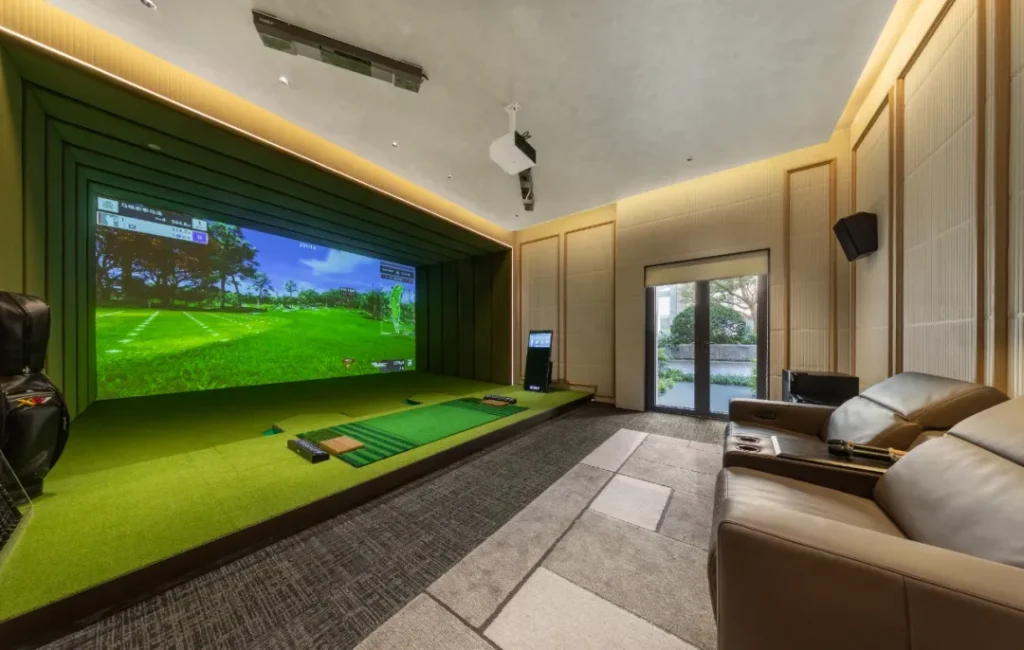
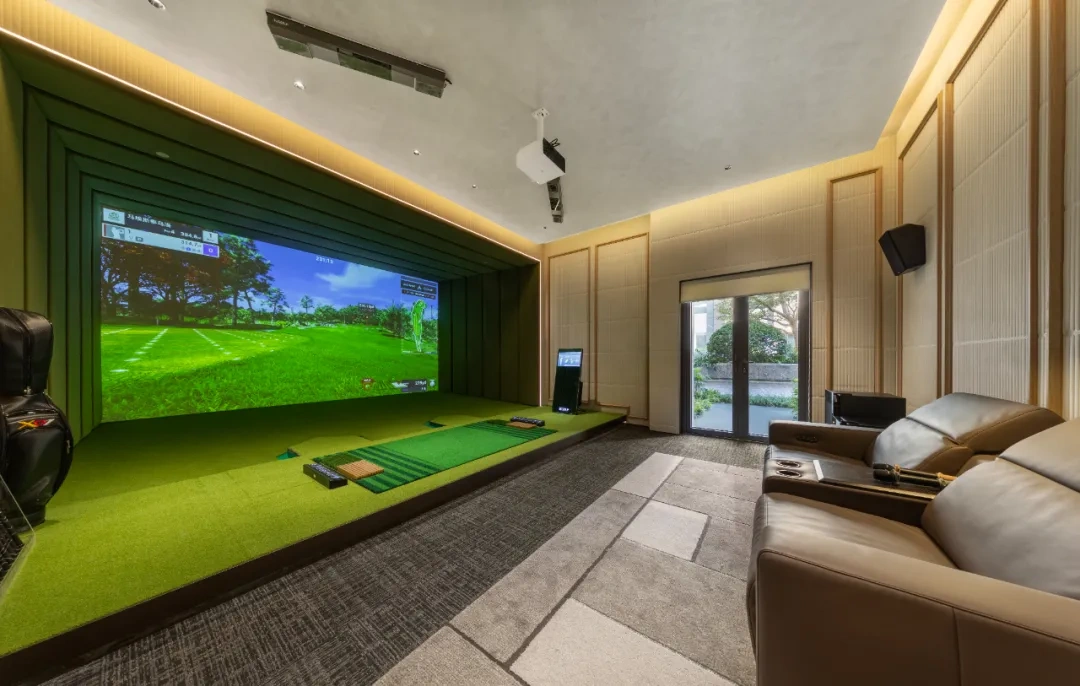
With the large-scale development of indoor golf commercial venues, chain golf experience centers and high-end private clubs, the Anti-impact Projection Screen has become an irreplaceable core component of the simulator system. For buyers and engineering service providers, the Golf Simulator Dedicated Anti-impact Projection Screen must not only withstand repeated impacts from high-speed golf balls, but also adapt to the needs of high-frequency use in commercial scenarios, cross-border long-distance transportation, multi-environment installation and long-term low maintenance. The refined design of material technology and anti-rebound structure directly affects the venue operation cost and user experience.
Core Commercial Challenge of Golf Hitting Screens: Balancing Kinetic Energy Dissipation and Image Gain
In commercial indoor golf scenarios, the player’s ball speed is generally maintained at 150-220mph, and the ball speed even exceeds 230mph in professional training scenarios. The instantaneous pressure generated when the ball hits the screen far exceeds the tolerance limit of ordinary household projection equipment. High-frequency hitting of hundreds of times per day will cause ordinary screens to quickly suffer from fiber breakage, surface wrinkling, image distortion and other problems. The core design logic of the Commercial Golf Anti-impact Projection Screen is to efficiently dissipate hitting kinetic energy while ensuring the uniformity of laser projection and short-throw projection images without hot spots, dark corners and color distortion.
Many engineering customers will wonder whether simply thickening the screen material can solve the impact resistance problem. In actual commercial scenarios, an overly thick screen will reduce the optical efficiency of projection, while an overly thin fabric cannot resist tearing risks. Only by balancing kinetic energy absorption and optical gain can the long-term stable operation needs of B-end customers be met.
2026 Engineering Grade Standard: Physical Parameters and Measured Data of Three-layer Composite Structure
For bulk procurement and engineering installation needs, the Three-layer Composite Anti-impact Projection Screen adopts a layered functional design. The material and physical indicators of each layer are customized in accordance with commercial grade standards. The latest measured performance data in 2026 are as follows:
| Structural Level | Core Material | Key Physical Indicators | Core Value for Commercial Scenarios |
|---|---|---|---|
| Bottom Impact Layer | High-strength Polyester Fiber | Warp Density≥1100D, Weft Density≥350D, Breaking Strength≥3800N | Resists high-frequency hitting, eliminates tearing and damage, adapts to scenarios with more than 500 hits per day |
| Middle Buffer Layer | High-elastic Closed-cell Sound-absorbing Foam | Density 35-42kg/m³, Rebound Suppression Rate≤18% | Eliminates trampoline effect, absorbs impact kinetic energy, reduces ball rebound probability |
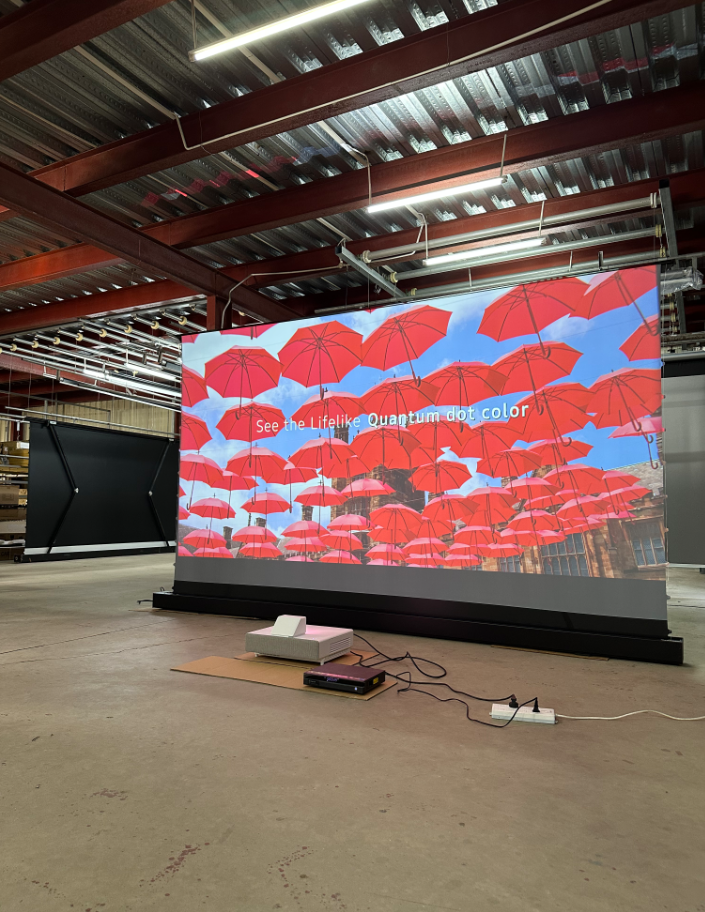
| Surface Imaging Layer | Optical Matte Polyester Coating | Image Gain 1.0±0.05, Haze≥88%, Reflectivity≤1% | Compatible with laser/short-throw projection, no image hot spots, qualified color restoration |
In terms of noise control of the Silent Anti-impact Projection Screen, measured data shows that the hitting noise of ordinary single-layer screens is about 62dB, while the three-layer composite structure can reduce the noise to below 36dB, with a noise attenuation range of more than 26dB, which is more in line with the silent operation specifications of commercial venues. The fiber weaving process of the High-strength Polyester Anti-impact Projection Screen can also improve the anti-aging performance of the fabric, adapt to different temperature and humidity environments , and reduce fabric deformation after cross-border transportation and long-term use.
Anti-rebound Safety Design Solutions for Commercial Scenarios
Ball rebound is a core potential safety hazard for indoor golf venues. Especially in crowded commercial experience centers, uncontrolled rebound can easily cause equipment damage and personnel bumps. The Anti-rebound Anti-impact Projection Screen reduces rebound risks from the root through multiple structural designs:
- Closed-loop tension system with elastic ropes around: Tension can be adjusted in sections to ensure uniform stress across the screen, avoiding local bulges caused by single-point impact
- Bottom weighted aluminum alloy guide rail: Dead weight≥2.5kg/m, fits the ground without warping, cooperates with Turf-to-Screen buffer transition technology to guide the hit ball to roll down naturally
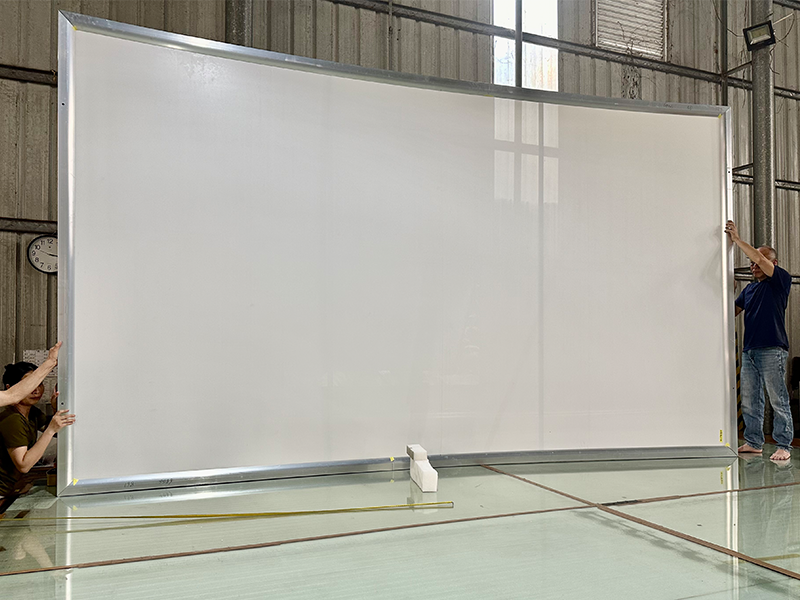
- Thickened edge wrapping: Adopts high-density nylon wrapping to prevent edge cracking after long-term stretching, adapting to large-size customization needs
- Wind-resistant flat design: Optimizes fabric tension for ventilated venues to avoid screen shaking affecting projection and hitting feedback
This design not only fits the commercial needs of the Indoor Golf Venue Anti-impact Projection Screen, but also simplifies the on-site installation process, reduces engineering construction costs, and meets the demands of B-end customers for rapid implementation and batch installation.
High-frequency FAQs and Practical Solutions for B-end Customers
When connecting with golf engineers and venue operators, the following questions are frequently consulted when purchasing the Laser Projection Compatible Anti-impact Projection Screen. We provide corresponding solutions based on actual implementation experience:
Q: Why can’t ordinary projection screens be directly used in commercial golf simulators?
Ordinary screens have low warp and weft density and no buffer structure. Ball speeds above 150mph will directly cause fabric tearing. At the same time, no energy absorption design will cause severe rebound, and the imaging layer gain does not match laser equipment, resulting in serious image hot spots, which cannot pass the safety and experience acceptance of commercial venues.
Q: How to efficiently clean black hitting marks on the screen in commercial scenarios?
Hitting marks are mostly rubber residues from the ball surface. The Tear-resistant Anti-impact Projection Screen has an anti-fouling coating on the surface, which can be wiped gently with a microfiber cloth dipped in neutral detergent without high-pressure washing to avoid damaging the fabric structure, suitable for daily rapid maintenance of venues.
Q: How to extend the service life of the core hitting area of commercial screens?
A 180-degree rotating installation scheme can be adopted, adjust the screen orientation every 4 months to disperse hitting stress points; double-layer reinforcement technology can be added to the central area during batch customization, which can improve the durability of the core area by more than 60% and reduce the frequency of venue consumable replacement.
Q: Can batch customization support non-standard sizes and brand logo printing?
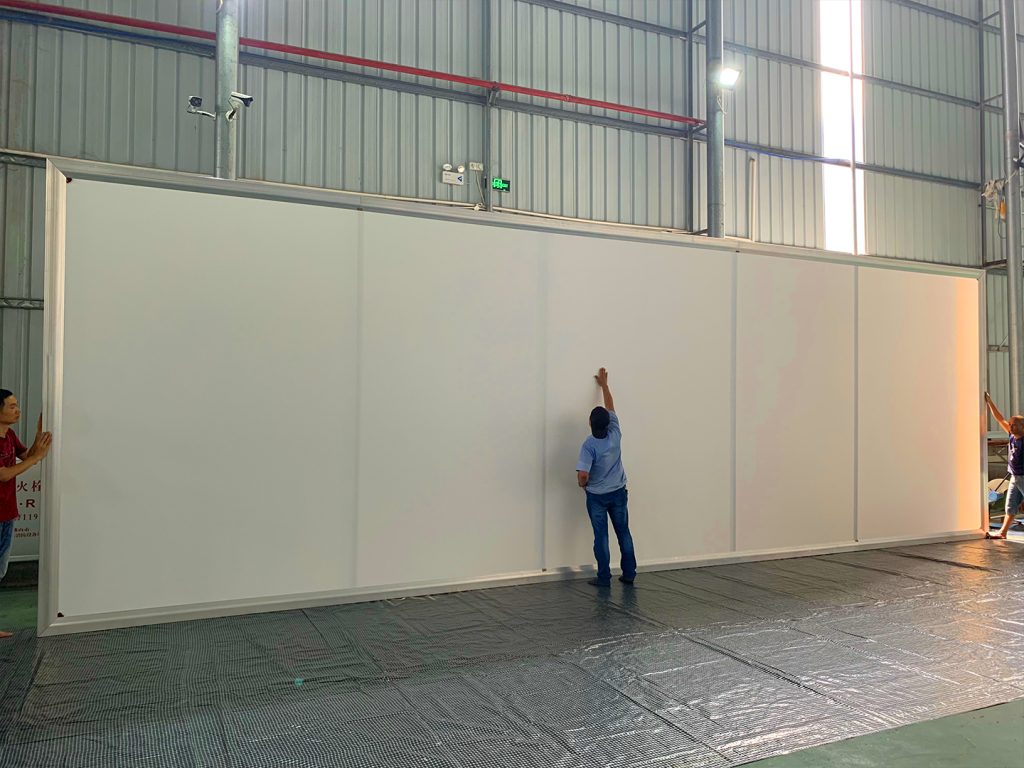
ZSM provides full-size non-standard customization services, supports custom width and height according to venue space, and can print venue logos on the screen edge to meet commercial brand display needs. It adopts cross-border special packaging to adapt to sea and air transportation standards.
Customization Services and Engineering Adaptation Support
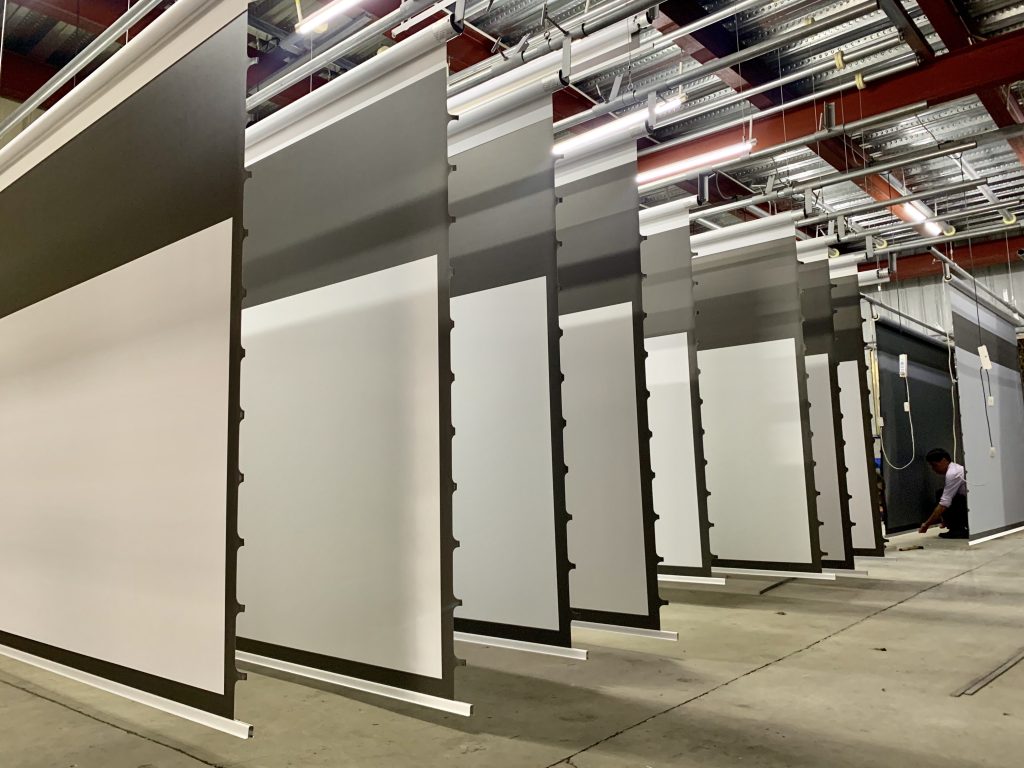
For customers, the delivery capacity and after-sales adaptation of the Custom Anti-impact Projection Screen are also core considerations. ZSM focuses on the customized production of projection screens, and can adjust fabric tension, structural technology and packaging schemes according to the installation specifications, venue sizes and usage scenarios of different countries. All products pass commercial-grade impact resistance and optical performance testing to ensure the consistency of batch delivery.
In the commercial indoor golf track, the material technology and structural design of the Anti-impact Projection Screen directly determine the operational stability of the venue and the customer repurchase rate. From the three-layer composite functional material to the anti-rebound structure fitting scenarios, and then to customized and batch delivery services, every detail is reducing operation and maintenance costs and improving project competitiveness for B-end customers.
 Scan QR Code
ZSMSCR Facebook
ZSMSCR Instagram
ZSMSCR X
ZSMSCR YouTube
ZSMSCR TikTok