
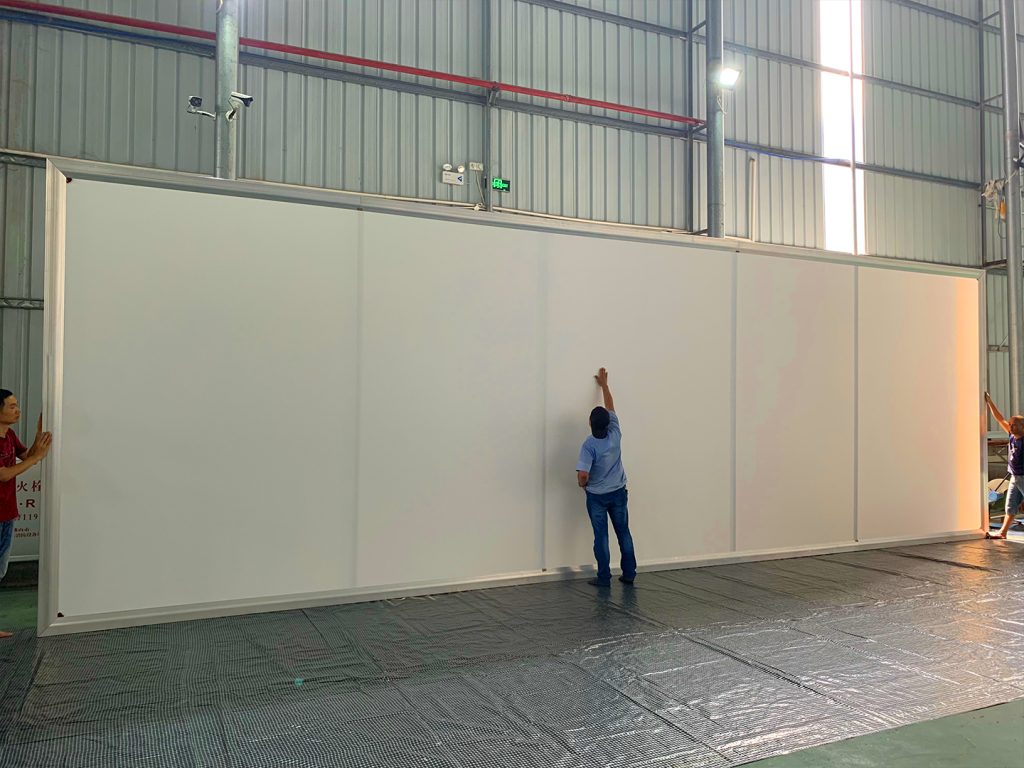
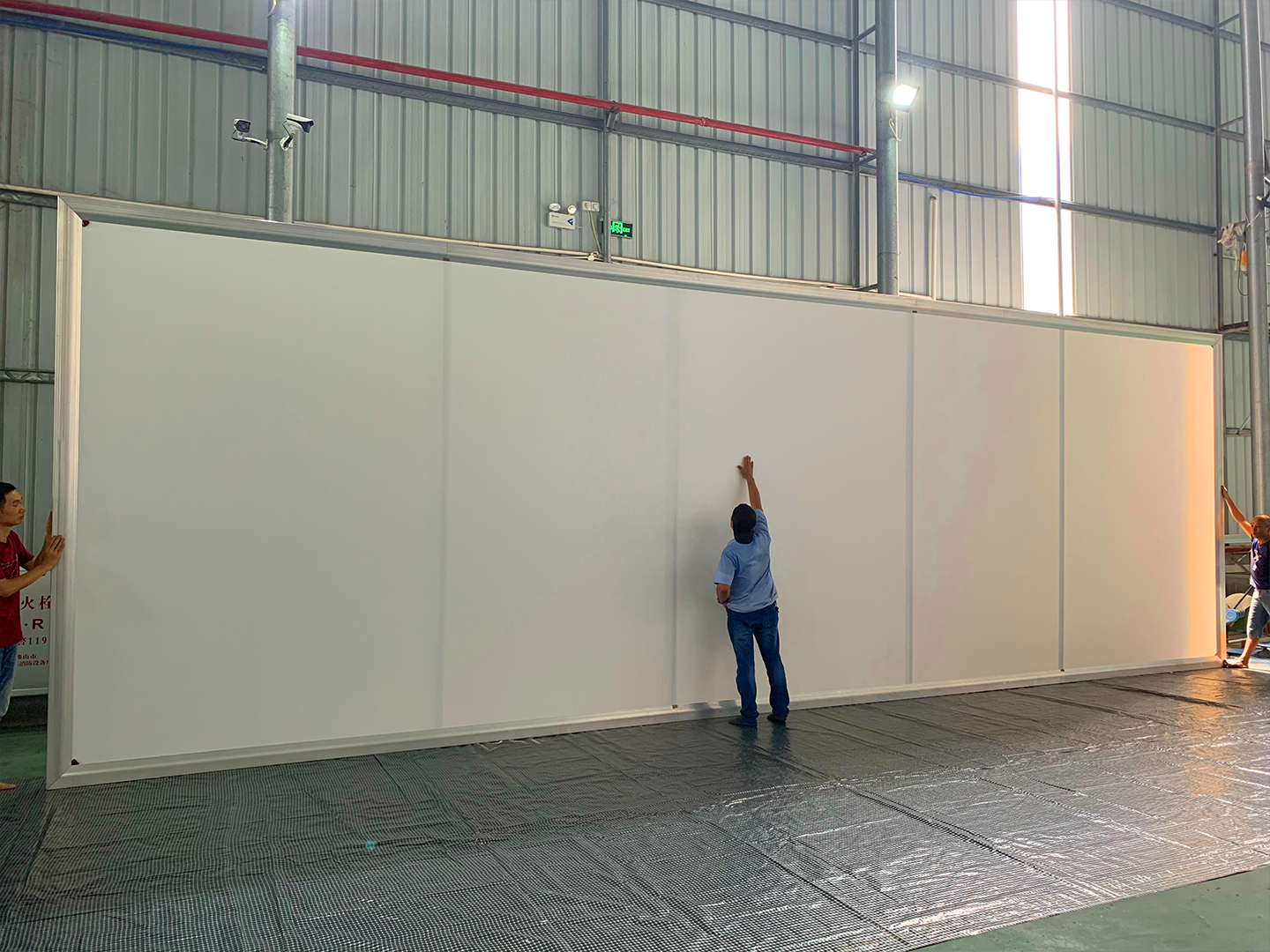
Commercial Projection Screen serves as the core audio-visual equipment for large venues including hotel banquet halls, convention centers, auditoriums, and commercial cinemas, and its picture performance directly determines the effect of event presentation and customer experience. Yet most venue operators overlook a critical issue: the lack of daily maintenance for high-altitude installed imaging systems is causing invisible ongoing losses. According to the latest 2026 survey data from the Global Commercial Audio-Visual Association, products without regular maintenance see an average optical performance degradation of more than 35% within 3 to 5 years, while the comprehensive cost of high-altitude full-screen disassembly and replacement is 12 to 18 times that of annual regular maintenance. Have you ever calculated how many high-end orders are quietly lost due to the dimming and color shifting picture in your venue?
Why Does High-altitude Installed Commercial Projection Screen Suffer Severe Picture Degradation in 3 Years?
Many venue operators attribute poor picture performance to projector aging, but in fact, more than 80% of picture degradation problems come from screen surface damage.
Speaking of which, screens installed at high altitude face a far more complex loss environment than low-altitude residential products. Large venues have dense daily foot traffic and continuous circulation of air conditioning systems, so dust, fibers, pollen and even oil fume particles floating in the air will continuously accumulate on the screen surface. The mainstream PVC and PET optical substrates have a surface resistivity of 10^12-10^14Ω·cm. After 4 hours of continuous playback in a 25℃ working environment, the static voltage can reach 800-1200V, acting like an invisible magnetic suction plate to firmly lock 0.1μm micron dust on the coating surface. Even a thin dust layer invisible to the naked eye can directly reduce the contrast and brightness gain of the picture by 30%, which is why many venue screens look like they are covered with a layer of fog after only two or three years of use.
A more insidious loss than dust is mildew in high-humidity environments. Especially for venues in Southeast Asia, Middle East coastal areas, and rainy regions of South America, where the annual relative humidity exceeds 70%, the substrate in long-term contact with humid air is very easy to breed mold. Once mildew spots penetrate into the interior of the optical coating, even local mildew will directly cause dark spots and blurring of the full screen picture, with almost no possibility of complete repair.
Non-contact Dust Removal: How to Clean Dust Without Damaging the Optical Coating of the Screen Surface?
In most cases, wet cloth wiping and feather duster cleaning, which are most commonly used by venue cleaning staff, are exactly the culprits that damage the screen. The fiber hardness of ordinary rags is much higher than that of the optical coating, even light wiping will leave irreversible scratches on the coating surface, and the moisture in the wet cloth will press dust into the coating micro-holes and even breed mold.
For high-altitude installed screen surfaces, the industry-recognized safe and effective method is non-contact dust removal technology. Here we provide clear and implementable operating parameters: it is recommended to use a high-frequency AC ionizing air gun with a constant air pressure of 0.3-0.5MPa and an air volume of 120L/min, with a static neutralization efficiency of ≥95%. During operation, keep a distance of 30-50cm from the screen surface, control the moving speed at 15-20cm/s, first neutralize the static electricity on the substrate surface, and then blow off floating dust at a constant speed; for dust dead corners at the top and bottom edges of the screen and frame corners, use a 0.1 denier ultra-fine fiber long-handled tool to clean with vertical light sweeping, without touching the core imaging area of the coating throughout the process, completely avoiding the risk of scratches.
Mildew Prevention in High-humidity Environments: Full-cycle Solutions From Production to Operation and Maintenance
In fact, mildew problems are never solved after they appear, but require full-cycle prevention and control from pre-installation, production technology to daily operation and maintenance.
During pre-installation, a complete venue environment assessment must be done to keep the screen away from direct air outlets of central air conditioners, areas with high incidence of pipeline condensed water, as well as catering preparation areas and areas adjacent to swimming pools in the venue. In daily operation and maintenance, the relative humidity around the screen should be stably controlled between 40% and 60% in conjunction with the venue’s HVAC system, which is the industry-recognized optimal humidity range for storage and use.
The core mildew resistance capability is actually determined at the production stage. High-quality imaging screens will be implanted with antibacterial and mildew-proof coatings during the production stage. For example, the nano-scale silver ion cross-linked antibacterial technology adopted by the full series of products from ZSM has a bacteriostatic rate of 99.92%, passes the ISO 846 mildew grade 0 test, and has no abnormality in the 1200-hour salt spray resistance test. Even in high-humidity and high-salt spray coastal environments, it can avoid the risk of mildew from the source. If sporadic superficial mildew spots are found, be sure to use a non-oxidizing, fluorine-free and non-corrosive special cleaner for local treatment by dipping, and never wipe directly with alcohol, disinfectant, or strong alkaline detergent, otherwise it will directly destroy the optical structure of the coating.
Exclusive Maintenance Points for Different Types of Screens
Why Does Wiping With a Damp Cloth Ruin ALR Screens?
This is the most common mistake made by our venue customers. The core imaging capability of ALR anti-light screens comes from the micron-level prism microstructure on the surface. Each prism unit is designed with precise optical angles to filter ambient light and improve picture contrast. Once wiped horizontally with a damp cloth, the prism structure will be directly worn down. Even just one improper cleaning will directly reduce the anti-light performance by more than 60%, and it is completely irreversible.
For this type of screen, any liquid cleaning and horizontal wiping are absolutely prohibited, only vertical non-contact dust removal with a low-pressure ionizing air gun is allowed. An optical gain test should be done once a year. ZSM’s supporting testing service uses ISF-certified professional equipment to test the gain value deviation and picture uniformity of the screen surface, evaluate the integrity of the anti-light layer, and predict the loss risk in advance.
How to Repair Micro-perforation Blockage of Acoustic Screens Without Affecting Sound Quality?
Whether it is a woven acoustic screen or a micro-perforated acoustic screen, the channel for sound transmission is also a heavy area for dust accumulation. Once the micro-perforations are blocked by dust, it will not only affect the uniformity of the picture, but also directly reduce the transparency of medium and high frequency sounds, resulting in a turbid sound field. Many venues use a vacuum cleaner for front suction, which will directly cause screen deformation and micro-perforation expansion, leading to moiré in the picture.
The correct operation method is to use one-way low-pressure ionized air purging to blow dust from the imaging surface to the back. For severely blocked micro-perforations, 0.2MPa pulsed ionized air can be used for fixed-point purging, without touching the screen surface throughout the process, and will not damage the micro-perforation structure and screen flatness.
Full-dimensional Comparison Table Between DIY Maintenance and Professional Operation and Maintenance
| Comparison Dimension | DIY Self-Maintenance | Professional Third-Party Operation and Maintenance |
|---|---|---|
| Applicable Scenarios | Small home screens, simple screens installed at low altitude below 100 inches | Large Commercial Projection Screen installed at high altitude above 8 meters, high-end custom products such as ALR anti-light screens and acoustic transparent screens |
| Operation Risk | High risk of high-altitude operation without professional protection, extremely easy to scratch the optical coating and cause screen deformation | Certified high-altitude operation team, full guidance from ISF certified engineers, operation complies with global audio-visual industry maintenance standards, zero risk of coating damage |
| Maintenance Effect | Can only clean surface floating dust, unable to deal with deep problems such as electrostatic adsorption, superficial mildew, and micro-perforation blockage | Complete the whole process of static neutralization, deep dust removal, mildew prevention and sterilization, optical performance testing, which can restore more than 95% of the initial optical performance of the screen |
| Single Cost | Low, only need to purchase cleaning tools | Medium, customized quotation according to screen size and installation height |
| Long-term Total Cost of Ownership (TCO) | Extremely high, improper operation is easy to cause irreversible damage, and the entire screen needs to be replaced within 3-5 years | Extremely low, the annual maintenance cost is only 6%-8% of the entire screen replacement, which can extend the service life of the screen from 5 years to 10-15 years |
| Overseas Compliance Adaptability | No compliance guarantee, equipment damage caused by improper operation is not within the manufacturer’s warranty scope | Complies with venue operation and maintenance safety standards in the EU, North America, Middle East and other regions, and maintenance records can be used as supporting materials for project compliance audit |
| Warranty Relevance | Improper operation will directly lead to the invalidation of the manufacturer’s warranty | Standardized operation and maintenance process meets the manufacturer’s warranty requirements, and can synchronously extend the warranty period |
Standardized Operation and Maintenance Checklist for Overseas Commercial Venues That Can Be Implemented Directly
- Monthly Inspection: Check whether the HVAC system airflow blows directly to the screen surface, inspect the screen edges and bottom edges for warping or budding mildew spots, test whether the lifting limit of the electric screen is normal, and record the temperature and humidity data around the screen
- Quarterly Maintenance: Complete full-range electrostatic dust removal of the screen, clean dust dead corners in the frame and slot, check the flatness of the screen surface, and record the basic data of brightness and contrast at the center and four corners of the picture with a professional photometer
- Semi-annual Deep Maintenance: For high-humidity and high-foot traffic venues, complete full-screen mildew prevention and sterilization treatment, test the micro-perforation patency of the acoustic screen, and lubricate and calibrate the limit of the tubular motor and transmission structure of the electric screen
- Annual Professional Inspection: Invite ISF certified engineers to complete the full optical performance evaluation, issue a test report, formulate a repair plan in advance for coating loss and mildew hidden dangers, and complete the fire performance sampling inspection simultaneously
Frequently Asked Questions About Operation and Maintenance From Global Venue Customers
Q: The hotel banquet hall frequently uses fog machines and snow machines, how to clean the oil and silicone residue attached to the screen surface without damaging the coating?
A: First turn off the air conditioning and fresh air system in the venue to avoid secondary pollution of dust driven by airflow, use a low-pressure ionizing air gun to blow off the floating dust on the screen surface first, then use a neutral degreasing cleaner that meets FDA food contact standards to treat the oil residue area by dipping, do not wipe horizontally during the whole process to avoid the oil film from spreading and penetrating into the coating; if the oil has penetrated into the substrate, you need to contact the manufacturer for professional deep repair.
Q: How to prevent condensed water and pests for hidden electric screens installed in the ceiling slot?
A: First of all, at least 2 ventilation openings should be reserved in the ceiling slot to avoid long-term accumulation of humid air, and the wiring in the slot should be well sealed to leave no gaps for pests to enter; safe pest control slow-release blocks can be placed in the corners of the slot, and must not be in direct contact with the screen substrate; before retracting the screen each time, let the screen stand in a ventilated environment for 30 minutes to ensure that the screen surface is completely dry before retracting, and open the slot cover for a ventilation and cleaning inspection every 2 months.
Q: Will cleaning affect the fire performance of screens that meet the NFPA 701 fire protection standard?
A: For most compliant products, the flame retardant is added internally during the substrate production stage, normal non-contact dust removal and neutral cleaner spot repair will not affect the fire performance; but if you use strong oxidizing or strong alkaline cleaners to scrub the full screen, it will destroy the flame retardant components in the substrate, resulting in a decrease in the fire rating, so full screen scrubbing with non-compliant cleaners is absolutely prohibited. The full series of Commercial Projection Screen from ZSM adopt internal addition flame retardant technology, and have passed the world’s mainstream fire standard tests of NFPA 701 B1 level and EN 13501-1 B level, and the flame retardant performance can be maintained for more than 10 years under normal operation and maintenance.
Q: For large temporary screens built in overseas convention centers, which are used frequently in a short cycle, how to do a good job in emergency maintenance?
A: After the construction is completed, do a full-screen electrostatic dust removal first, use an ionizing air gun for quick floating dust cleaning after the end of the daily event, to avoid electrostatic adsorption caused by dust staying on the screen surface for too long; special screen cleaner and ultra-fine fiber tools should be reserved on site to deal with emergency treatment of wine splashing and stain contamination. Before disassembly after the event, a complete screen inspection and cleaning should be done, and then moisture-proof sealed packaging should be done to avoid mildew growth during transportation.
ZSM’s Technical Support: The Underlying Logic to Double the Service Life of Screens
ZSM, as a professional manufacturer deeply engaged in the R&D and production of mid-to-high end Commercial Projection Screen, has provided customized audio-visual solutions for commercial venues, hotels and cinemas in more than 30 countries and regions around the world since its establishment in 2017.
Our full series of products have passed all tests in ISF-certified laboratories before leaving the factory, with gain value deviation ≤3%, picture uniformity ≥98%, complying with DCI digital cinema technical specifications; they have also completed professional anti-static, anti-bacterial and anti-mildew treatment, adapting to the climate environment and usage scenarios of different regions around the world. At the same time, we have a professional engineer team certified by ISF, HAA and THX, which can provide targeted long-term maintenance solutions and technical support for global distributors and venue customers, helping you minimize operation and maintenance costs, extend the service life of the screen, and ensure that every screen can maintain the best imaging effect for a long time.
 Scan QR Code
ZSMSCR Facebook
ZSMSCR Instagram
ZSMSCR X
ZSMSCR YouTube
ZSMSCR TikTok